AI juror taps Korean AI film 'Zero' for honor as director touts importance of human creativity
[INTERVIEW]
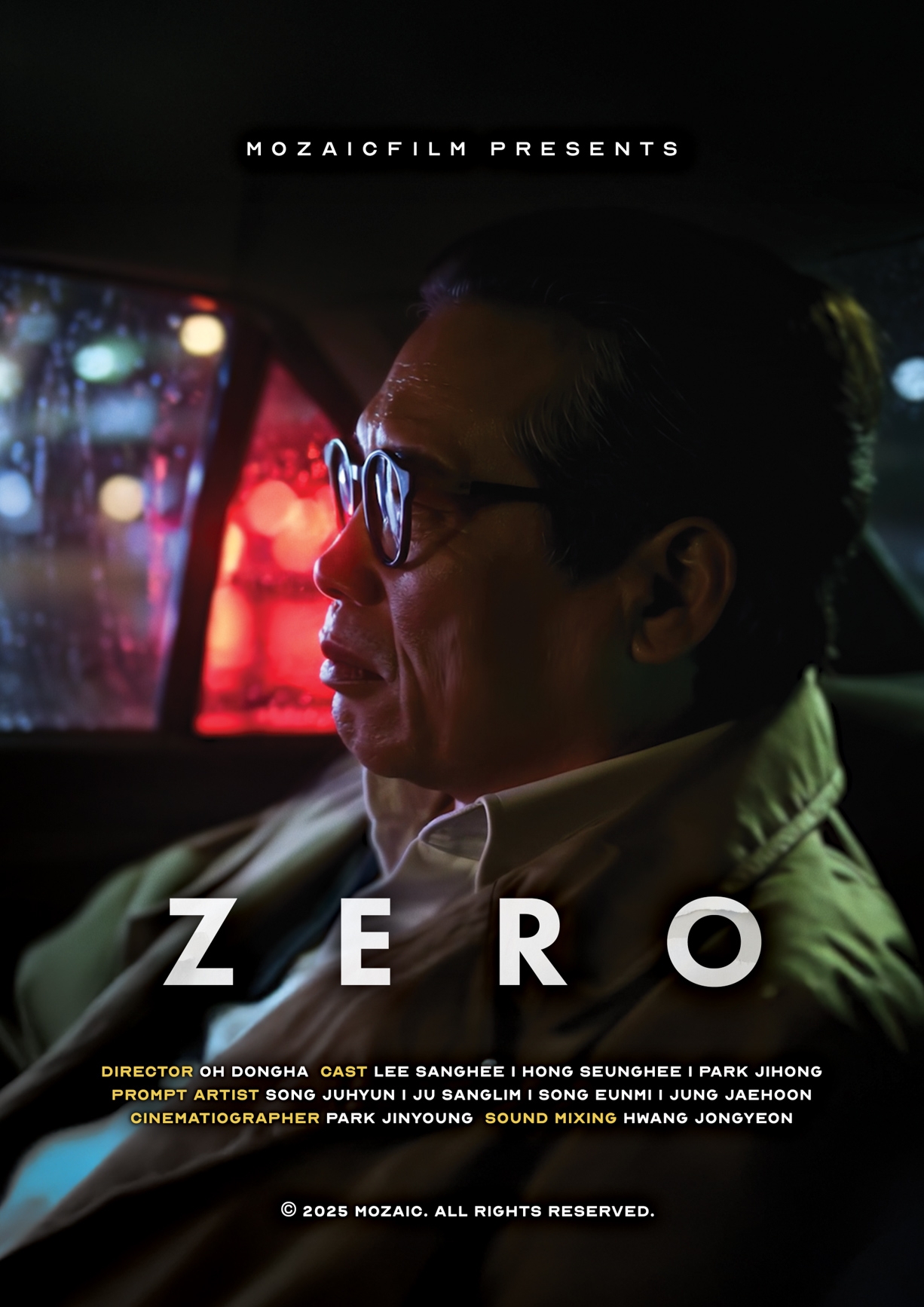
AI can search, write and even make films — but this time it wasn’t creating, it was judging. For the first time ever, AI served as a juror in a film festival and selected a film as an award winner. That honor went to Korean director Oh Dong-ha’s short AI film, “Zero,” a near-future drama about an AI novelist outperforming human literary ability.
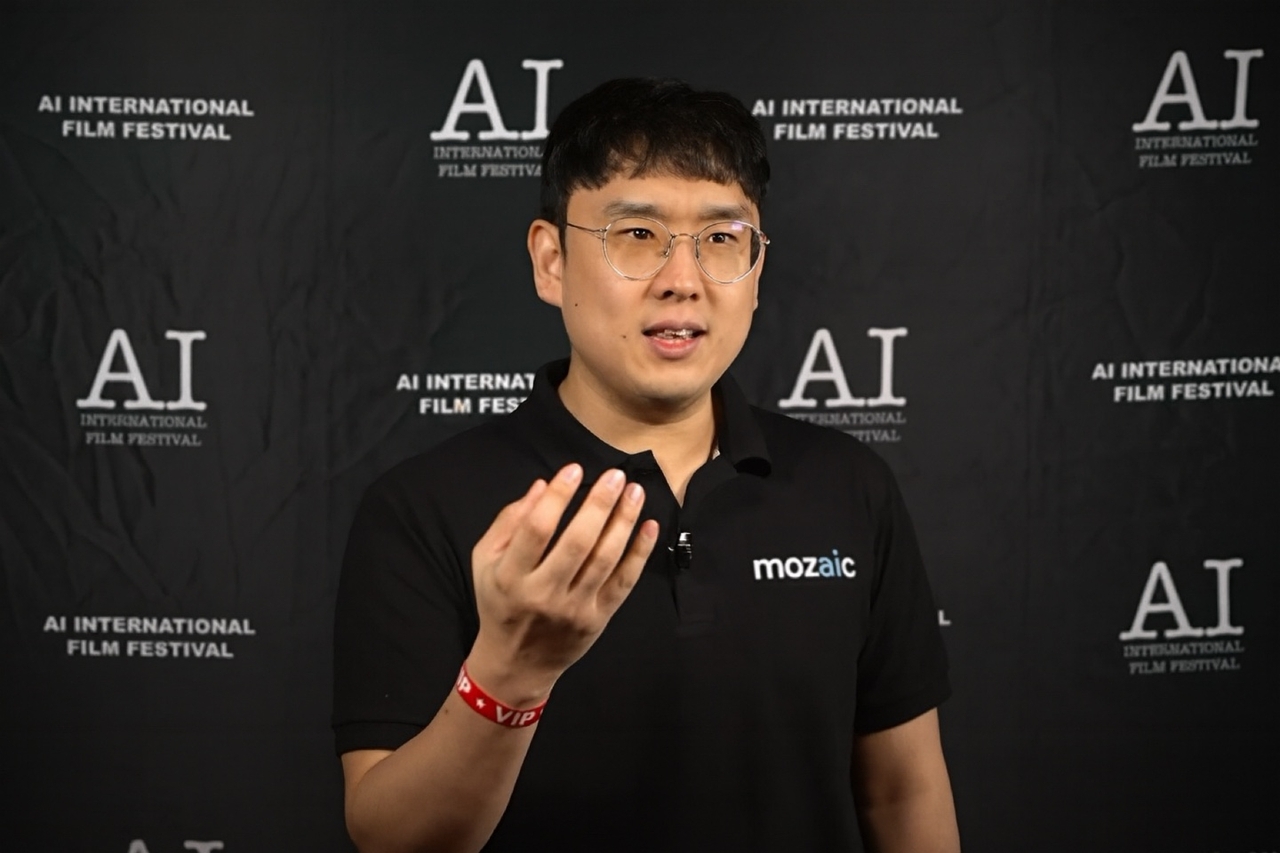
In an interview with the Korea JoongAng Daily, Oh admitted he never imagined that AI would actually judge his film, especially one that questions the very technology at its heart. Last month, Oh received the Best AI Critic Award at the AI Film Festival Japan, which accepted films that used AI in either content or production. In his category, the AI juror selected the winner from among 440 submissions across 43 countries.
“At first, I didn’t realize the award had been judged by AI. I just assumed it meant the film’s critique of AI was well-received,” said Oh.
“But later, when I heard that AI had selected ‘Zero’ as the best film, I found it quite interesting because the film questions the technology and carries a critical tone toward AI, yet AI itself chose to give me the top honor. In a way, it felt like AI completed the narrative of the film for me.”
Set in a world where AI has advanced to the point of winning the Nobel Prize in Literature, the film follows writer Jang Yu, who was once considered for the prize, confronting the developer of AI novelist ZERO. There, he learns that his literary acclaim has been stolen by the AI novelist and makes an irreversible decision.
Although the film was created using AI, it ultimately underscores the “brilliance of human creativity and dignity,” revealing that ZERO’s writing closely mirrors Jang’s earlier works.
“In the end, no matter how much creativity or literary skill AI may demonstrate, its foundation will always be human,” Oh said.
The director has been in the industry for over a decade, but “Zero” marks his first AI film. Despite being a newcomer to the technology, it has earned numerous international accolades, including four honors — Best Hybrid AI Film, Best Director, Best Screenwriting and Best Drama — at the AI International Film Festival held in Hollywood.
It took Oh only six months, mostly through YouTube, to begin working with generative tools. Yet, the film shows a consistency many AI filmmakers struggle to achieve. The director said the key was using real actors and training the AI on their facial expressions, creating a hybrid AI–human performance. Only the announcer in the film is fully AI-generated. Other characters were played by actors: Jang Yu was played by actor Lee Sang-hee, AI developer Vera was played by Hong Seung-hee and the taxi driver was played by Park Ji-hong.
The AI was also used as a script assistant, according to Oh, significantly reducing production time. He revealed that the line “No matter how sophisticated ZERO may seem, it doesn’t feel pain, knows no waiting and never experienced loss” was written by AI itself — an ironic moment for the director since it reflects on its own limitations.
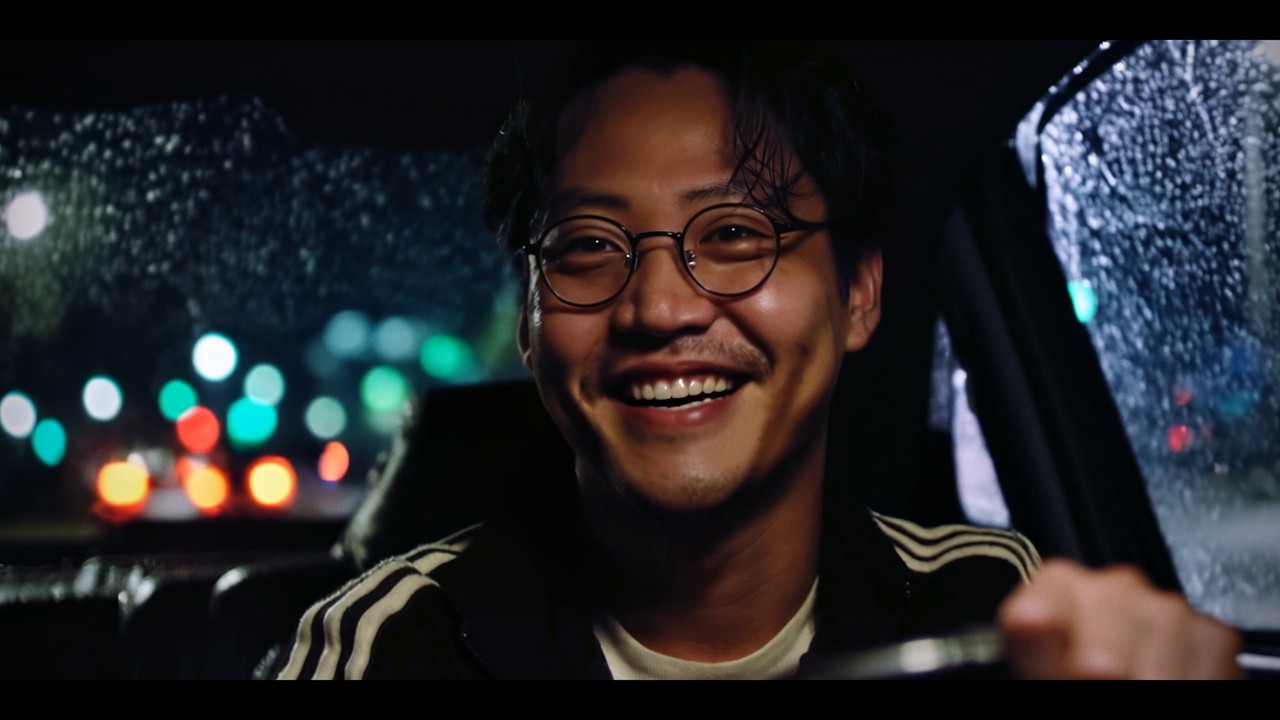
Despite its usefulness, Oh pointed that AI still falls short in certain areas, particularly in conveying emotions and depth, which led him to have actors dub voices for the AI-generated characters.
“Jang Yu says, ‘You have insulted literature,’ in the film, which AI can technically say,” Oh said. “But it can’t embody the emotion, the despair behind those words. That depth simply didn’t translate.”
Visual flaws remain, too, like body distortion. At the end, a three-armed Vera dances slowly — a deliberate choice to “clearly show, through the human eye, the current instability of AI technology.”
For Oh, working with AI changed how he now views filmmaking. Throughout his career, he faced hurdles familiar to many creators in convincing investors to back projects and acquiring funding. AI felt like a way around those barriers.
“There’s no need to persuade people of why I want to shoot a project or to fund me,” he said. “I can just make them [using AI]. And the fact that I can do that — that ability itself — has made AI such an incredibly enjoyable tool for artistic creation.”
Still, ethical concerns, especially when generating images resembling real people, remain that creators should always be alarmed — an issue he actually encountered while creating an audience scene, in which he spotted someone AI created who looked too much like Hollywood actor George Clooney.
To prevent such unintended outcomes, the director stressed that humans must remain the primary “decision-maker,” as after all, humans are the ones who provide the source material, context and intention behind creative work.
BY KIM JI-YE [kim.jiye@joongang.co.kr]