‘I got a phone and Wi-Fi’: How an extremely online K-pop generation was born
Attention is a scarce and fleeting commodity in the heavily saturated market of K-pop. Idols often have mere seconds to capture the interest of potential fans. What will you do with that moment?
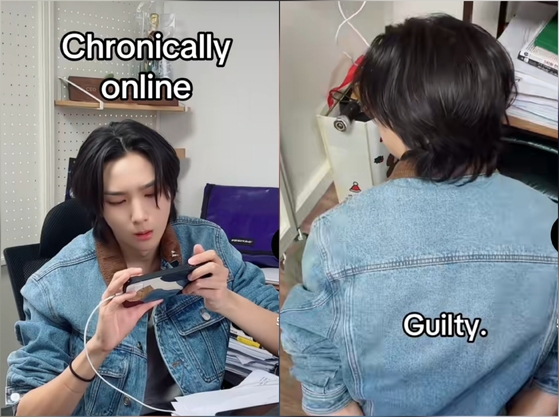
Meet Kenny, a self-proclaimed “personality hire” of rookie boy band 1Verse and the resident meme master.
The 22-year-old idol, along with his bandmates, has been uploading various short clips to social media in which he is dressed in a pumpkin costume, aggressively hits the camera, is smacked by a ball on his head while giving “birth” to an album or lip-synchs to viral TikTok sounds.
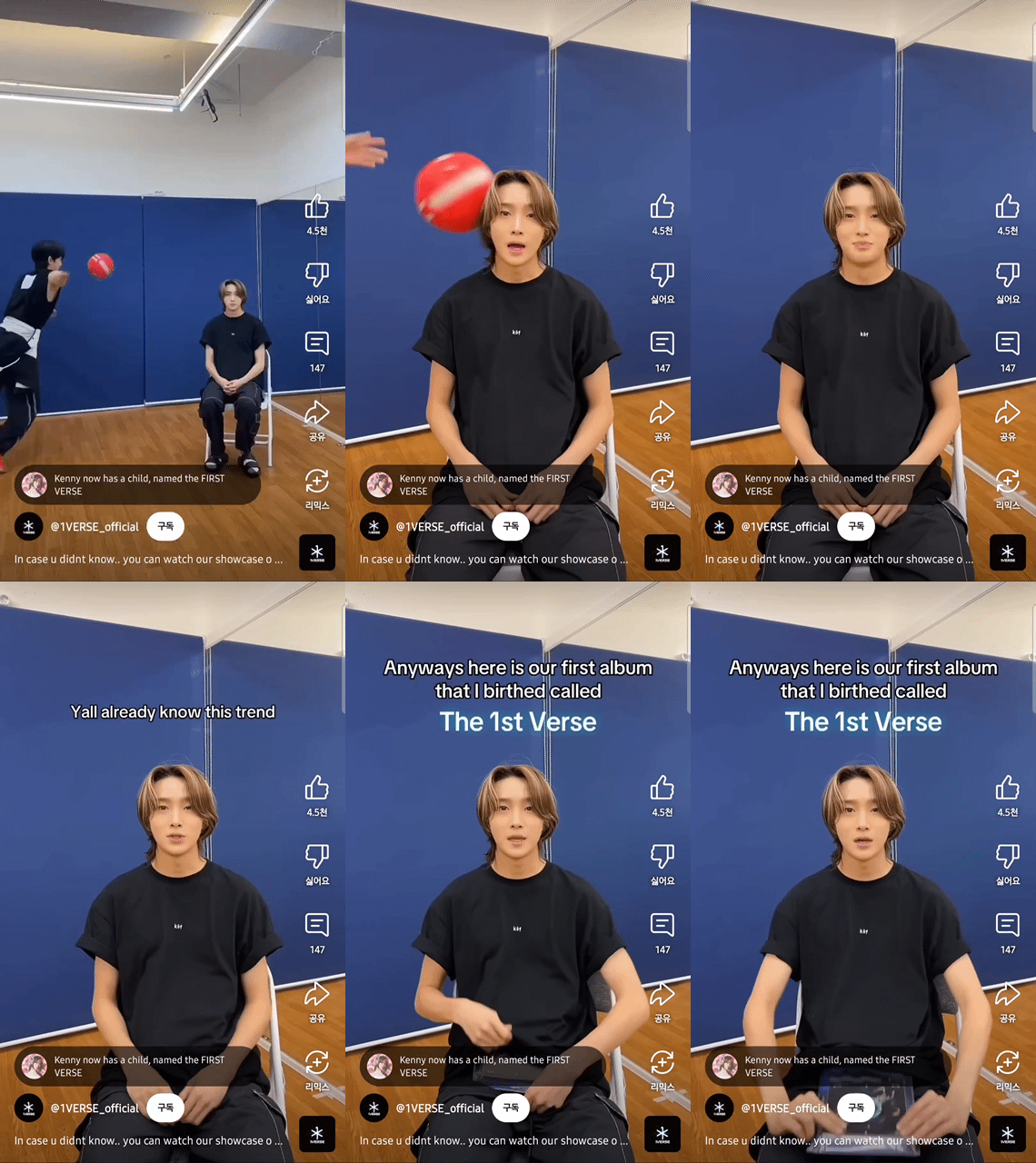
“Chronically online K-pop idols are like a social experiment,” read a comment on one of Kenny's TikToks, which received 300,000 likes in November of last year, with an added, “(I love it),” receiving more than 10,000.
1Verse, which debuted Friday as the first group launched by new agency Singing Beetle, has been building quite a solid fan base, securing more than 1 million followers across its social media channels, including TikTok, YouTube and X.
In an industry where star power has long been defined by talent, looks, and relentless discipline, a new variable has entered the equation: meme literacy, the ability to understand, utilize, recreate and perhaps even generate memes that go viral online.
Viral becomes vital
Social media has always been a part of the attention economy of K-pop. Yet with the industry's global reach expanding, algorithmic visibility matters more than ever. In this cutthroat landscape, memes are one of the most effective tools to instantly hook people and stop the scroll.
As such, meme literacy now serves as a survival mechanism, especially for smaller agencies on an increasingly uneven playing field as larger companies invest heavily in going viral. Kakao Entertainment, for one, paid 860 million won ($620,000) from 2016 through 2023 to 35 advertising agencies to promote its content without clearly disclosing the financial relationship, for which it was fined 390 million won for violating advertising regulations in March.
Being good at short-form video has become a major selling point for artists in recent years, according to a spokesperson for Starship Entertainment, which represents K-pop acts like girl group IVE and boy band Monsta X.
“TikTok users mostly watch recommended content instead of actively searching for content uploaded by the accounts that they follow,” said the spokesperson. “The recreation of trending memes certainly helps boost the exposure of artists.”
Authenticity over aesthetics
Money only does so much when it comes to social media marketing: Building a likable online persona, or content that appears “authentic,” remains a crucial component of fandom-building in K-pop. This means that the involvement of actual idols, not just marketing teams, is key, according to industry executives.
“About 50 to 70 percent of the entire content uploaded online is developed by our staff members, but the majority of short-form content with humorous angles is filmed by the members themselves,” said Joe Lim, chief finance officer of Singing Beetle, which is behind 1Verse.
“The spontaneity and authenticity of it all draw in fans, particularly overseas.”
For a growing number of Gen Z and even Generation Alpha idols — born roughly between the late 1990s and early 2010s — digital fluency comes naturally.
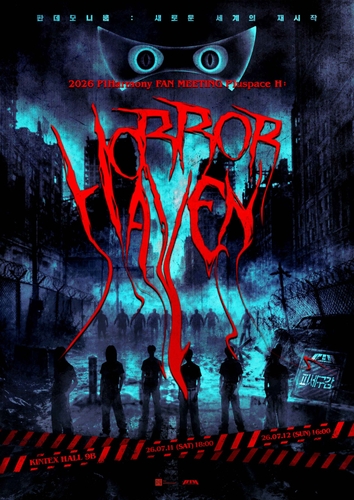
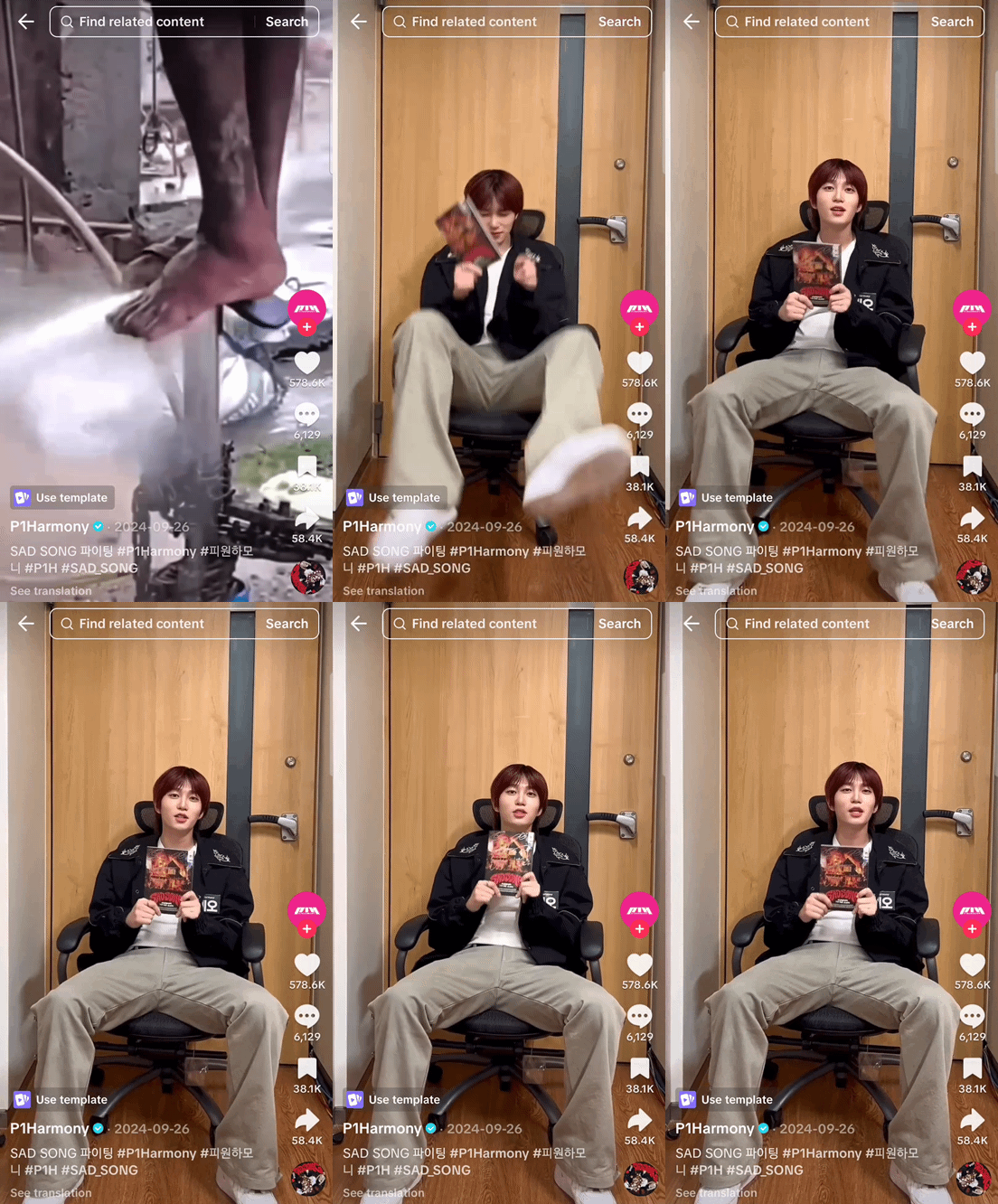
P1Harmony’s Keeho is known for recreating TikTok trends and quoting popular online memes in viral videos.
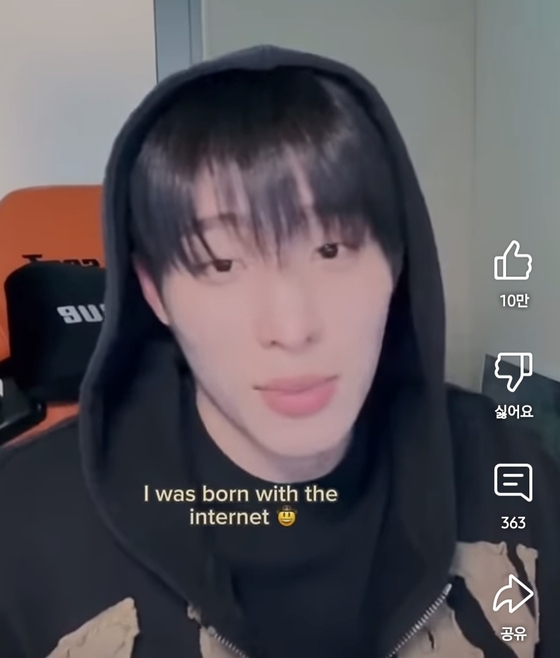
The 23-year-old, who debuted in 2020, responded to the question, “Is that a wig?” during a livestream in December of last year with a quote of a popular online meme of a viral interview clip where the interviewer asks Elijah Wood whether he wore, and had ever worn, a wig.
As fans described him as “chronically online” for quoting the famous meme, he said, “Baby, I got a phone and Wi-Fi — I was born with the internet.”
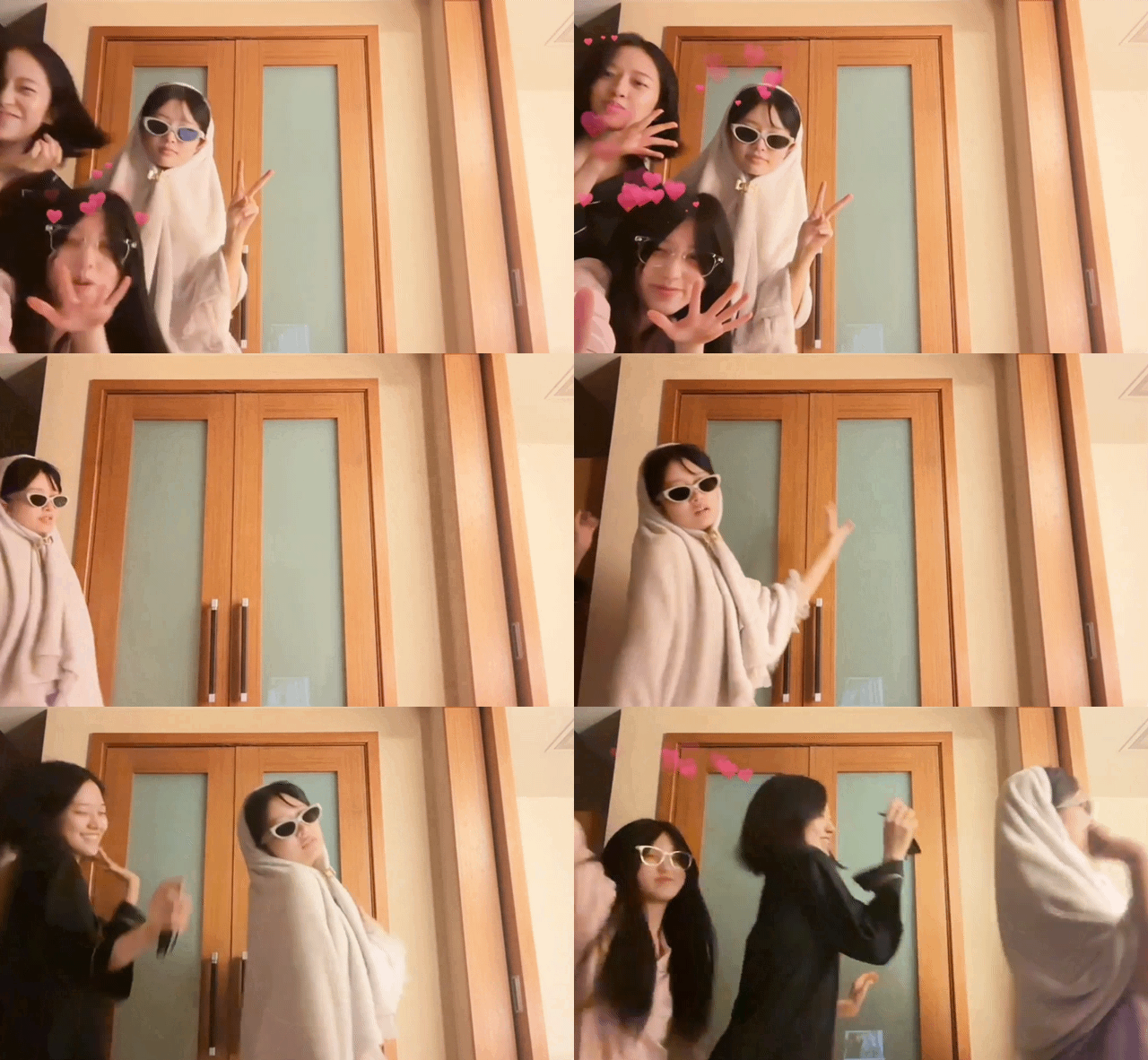
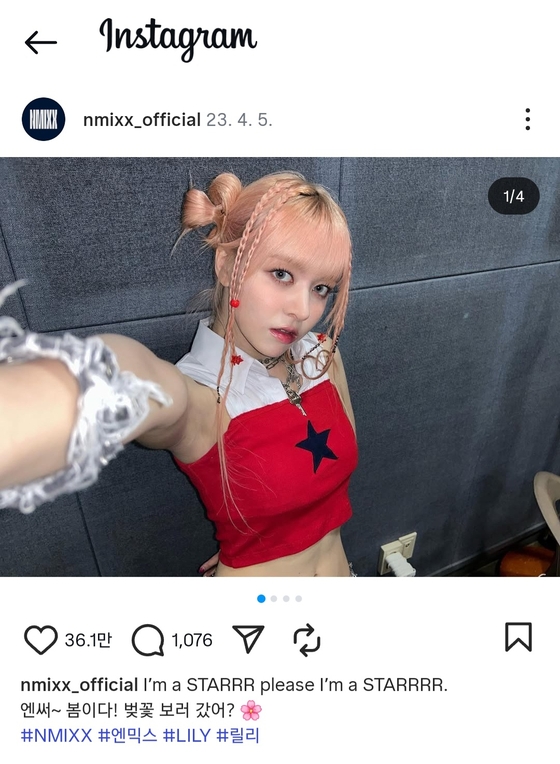
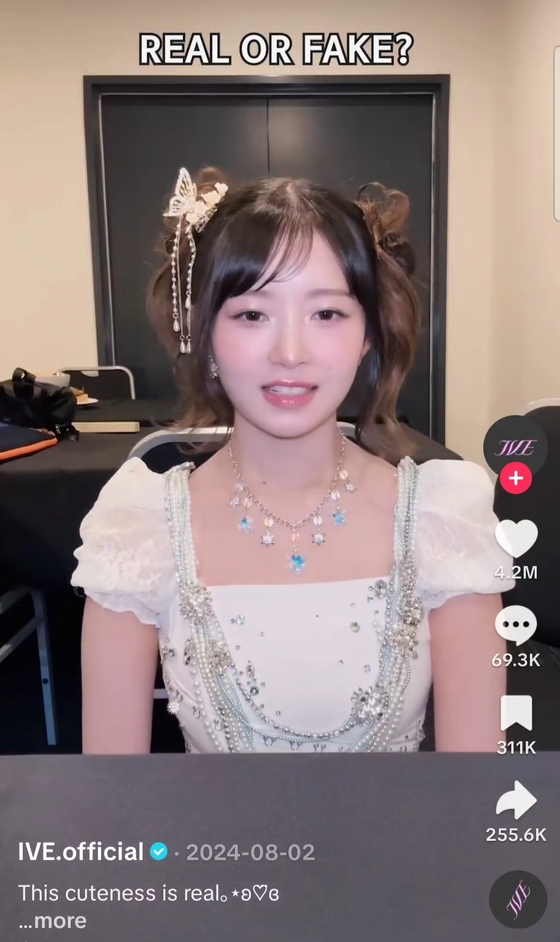
IVE’s Rei has also gone viral numerous times, especially for cute recreations of TikTok trends. Idols with overseas backgrounds, particularly those with experiences with English-speaking cultures, also tend to be more familiar with popular English-language memes, as seen with Nmixx's Lily, who regularly goes viral with meme recreations, and Ghost9's Prince, famous for his funny and brutally honest videos uploaded on his personal TikTok account.
Those in the industry say one common trait among idols known for being “chronically online” is that fans perceive them as the creative driver of their own short-form content, rather than their agency.
“If you’re an established act, how lame your Instagram feed looks might not matter that much — but if you’re in a new generation, you need social media,” said a content creator with more than 100,000 followers across social media, describing a K-pop idol’s Instagram feed with well-organized images carefully crafted by a marketing team as “so bad.”
The creator, who spoke on condition of anonymity in an effort to preserve ongoing business relationships with K-pop agencies, stressed that perceived authenticity and consistency are the key.
“Just like how each group has members specializing in vocals, dancing and such, I personally think companies will start considering how good a person is at social media when they cast a trainee in the future,” she said.
A spokesperson for FNC Entertainment, which manages P1Harmony, said that around 40 percent of its short-form content is “based on ideas pitched and developed by artists themselves,” adding that “Keeho certainly takes the lead.”
Social media plays a crucial role in building international fandom in particular, especially for overseas fans in regions with limited access to global tours, who don't have as many opportunities to meet artists in person as frequently as those in Korea and mostly consume online, the spokesperson added.
Is there a safety net?
Matthew of ZeroBaseOne recently deleted a TikTok post in which he used a controversial meme associated with the Israel-Hamas war, later apologizing and promising to “do my best in the future to double-check what I post.”
Being constantly online has its pros and cons: While it brings renewed attention to idols like Matthew, it also leaves them more vulnerable to missteps and backlash.
“We train our artists before they begin engaging in fan communities, including guidance on how to navigate online spaces like social media platforms,” said a K-pop agency employee, speaking on condition of anonymity because they were not authorized to speak on the matter on the company's behalf.
Some K-pop companies have incorporated digital literacy training education into their regular training program while also conducting regular checkups to support artists' mental health.
“Awareness of mental health issues certainly has grown over the past years,” the official added. “Of course, it's impossible to completely eradicate hateful comments online even with strict monitoring and legal actions — so in most cases, companies conduct regular mental health checkups and management to support artists' mental health.”
BY SHIN HA-NEE [shin.hanee@joongang.co.kr]