Nation blanketed by heavy overnight snow
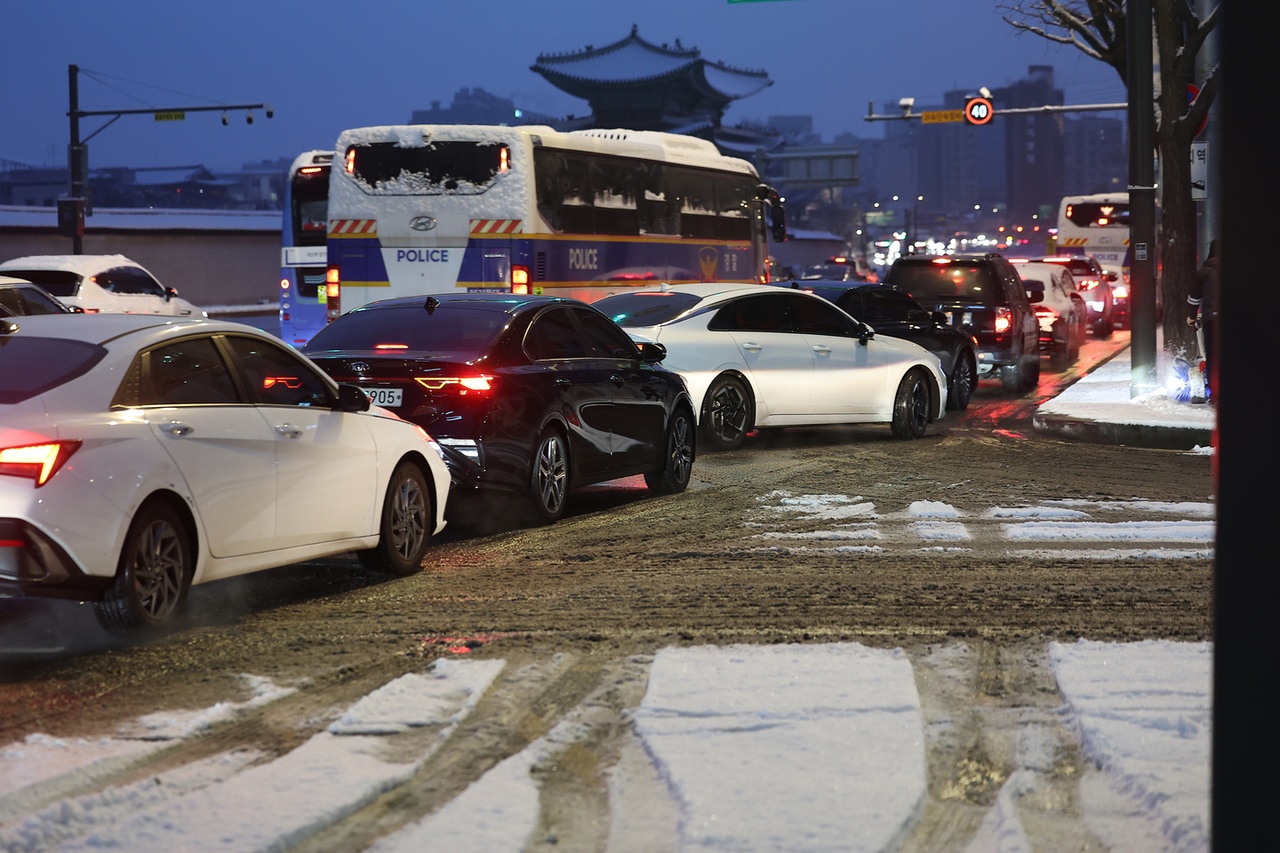
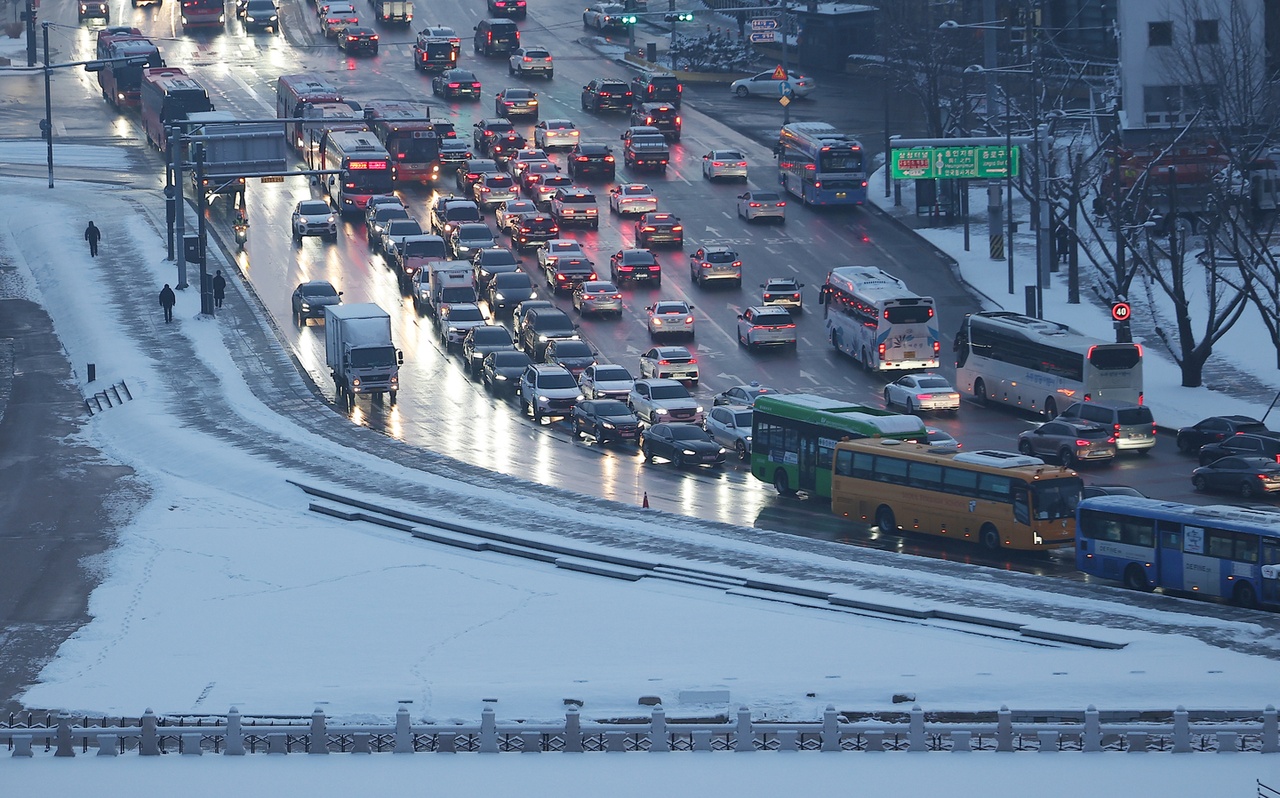
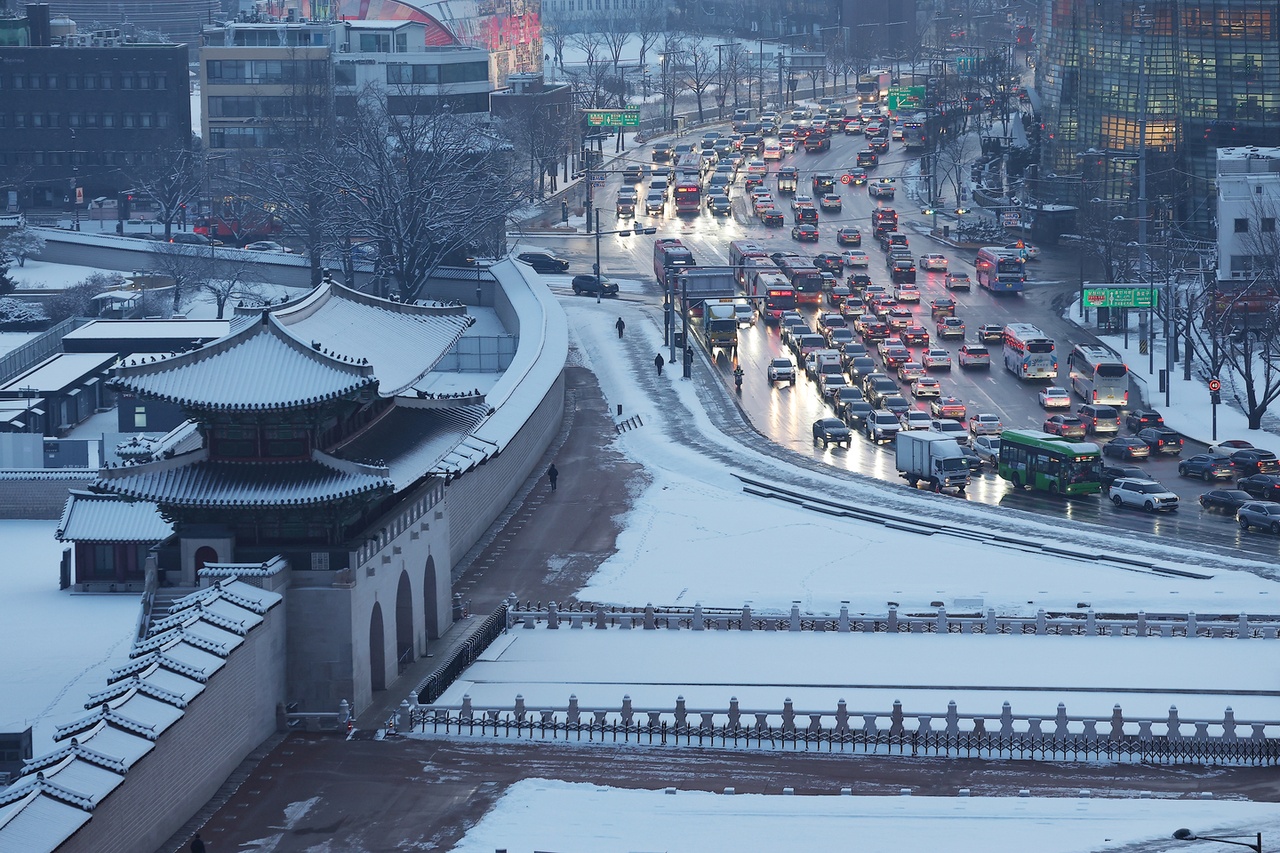
Heavy snow blanketed the nation overnight on Monday, disrupting the morning commute, and the weather agency forecasts snowfall to continue in eastern and southern parts of the country.
A heavy snow advisory was lifted for Seoul at 4 a.m. City officials mobilized snow removal trucks throughout the early morning to spread deicing agents and minimize inconveniences to commuters.
The city also issued a mobile alert at 6 a.m. to warn of slippery roads due to the overnight snow and advise commuters to use public transportation. To help with this effort, it maintained peak-hour subway train frequencies for Lines No. 2 and No. 5 through 8 until 9:30 a.m. and ran 20 additional trains. It did the same for city buses, extending the usual peak commuting period from 7 to 9 a.m. by 30 minutes.
Some parts of the wider capital area are expected to see light snow of less than 0.1 centimeter (0.04 inches) in the morning, though other parts of the nation will see more snowfall, according to the Korea Meteorological Administration (KMA).
The eastern islands of Ulleung and Dokdo are forecast to receive 5 to 10 centimeters of snow, and parts of the southwestern provinces of South and North Jeolla will see snowfall of 3 to 8 centimeters.
Meanwhile, the eastern province of Gangwon, the central city of Daejeon and parts of South and North Gyeongsang are expected to see 2 to 7 centimeters of snow.
Most parts of the nation will see cloudy skies clear later in the day.
As of 5 a.m., the temperature stood at minus 2.4 degrees Celsius (28 degrees Fahrenheit) in Seoul, minus 3.7 degrees Celsius in Incheon, minus 3.3 degrees Celsius in Gwangju and minus 5.9 degrees Celsius in Daegu.
Daily highs are expected to reach minus 1 to 6 degrees Celsius.
A black ice warning was also issued across major roads nationwide on Monday.
Twelve expressways — including the Gyeongbu and Seohaean expressways — were given the highest “danger” level on the four-tier black ice risk scale, according to the KMA road weather system.
The “danger” level was also assigned to inbound and outbound sections of the Gyeongbu Expressway; most sections of the Seohaean Expressway except near the Bulgapsan Hi-Pass interchange; and nearly the entire Yeongdong Expressway except the Yongin junction.
Experts attributed the heightened risk to the overnight snowfall. Black ice forms easily when moisture interacts with cooling road surfaces.
BY PAIK JI-HWAN, YONHAP [paik.jihwan@joongang.co.kr]