Park Chan-wook hopes 'No Other Choice' can help revitalize Korean movies as film opens BIFF
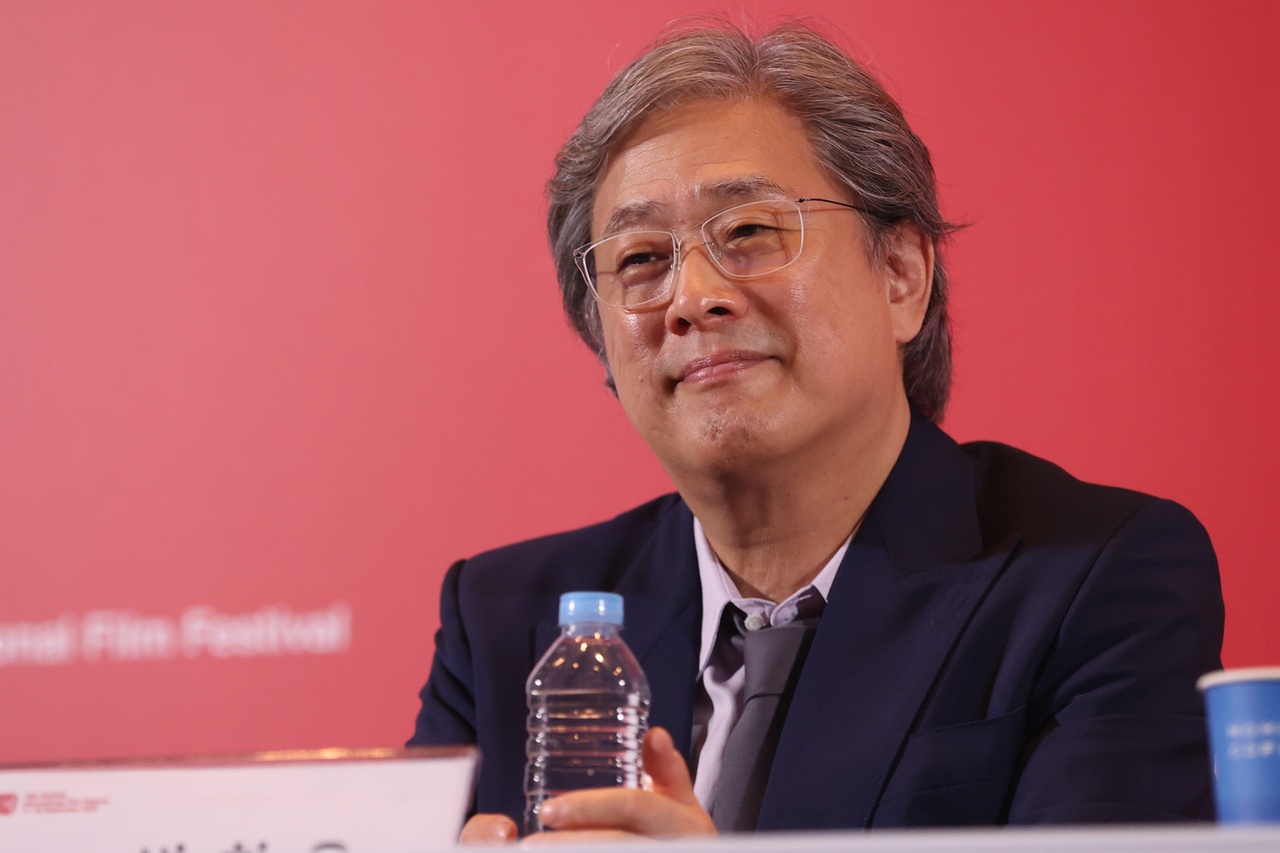
BUSAN — Filmmaker Park Chan-wook said he felt both excited and nervous to have his latest feature, “No Other Choice,” open the 30th Busan International Film Festival (BIFF), which kicked off in the coastal city on Wednesday. He also added that he hoped the film’s already-earned international acclaim would play “even a small part” in revitalizing Korea’s struggling film industry.
“No Other Choice” had its worldwide premiere abroad, having recently competed at the Venice International Film Festival and winning the International People's Choice Award at the Toronto International Film Festival.
“As many of you know, I’ve been preparing for this film for a long time, and it’s really moving to finally present it here in Korea for the first time,” said director Park during the film’s press conference held at the Busan Cinema Center on Wednesday afternoon, ahead of the BIFF’s opening ceremony.
“It’s my first time coming here to open the festival, so I’m especially excited. And with this year marking its 30th anniversary, it feels even more meaningful,” he added, expressing some nervousness about how Korean audiences would receive the film.
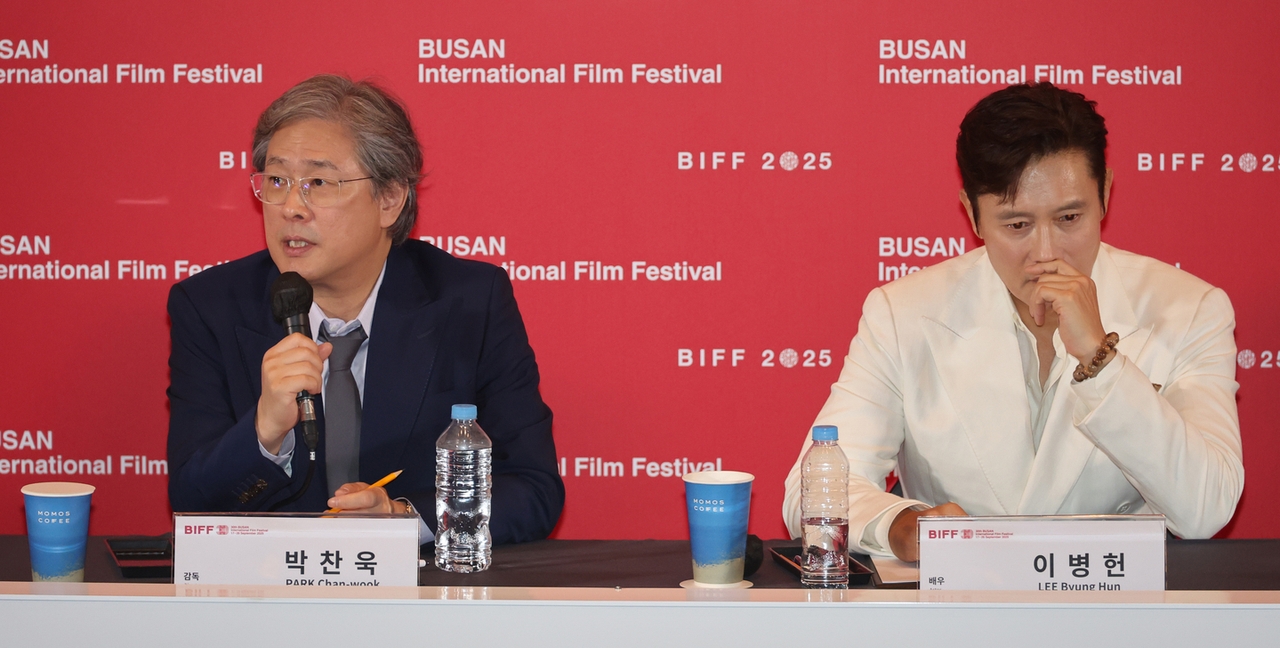
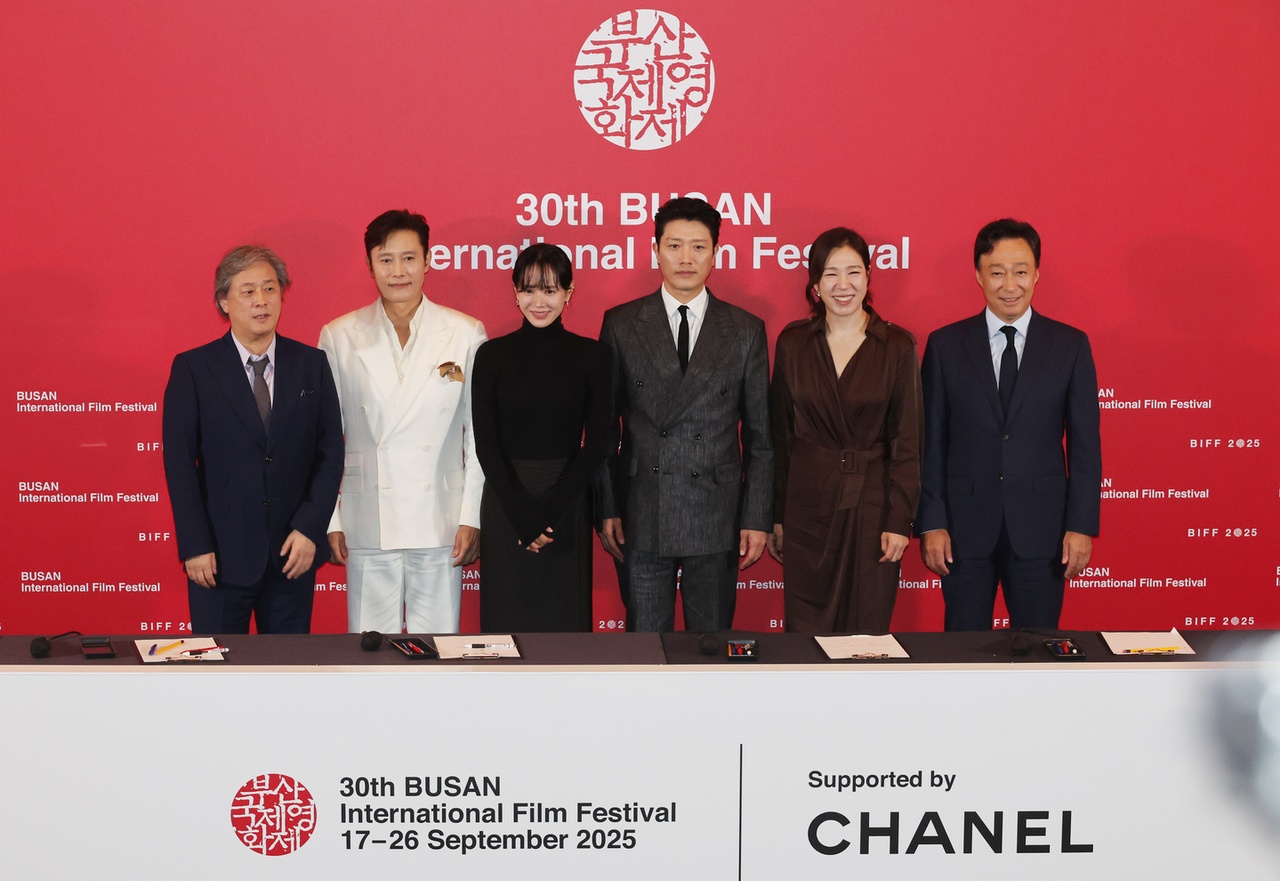
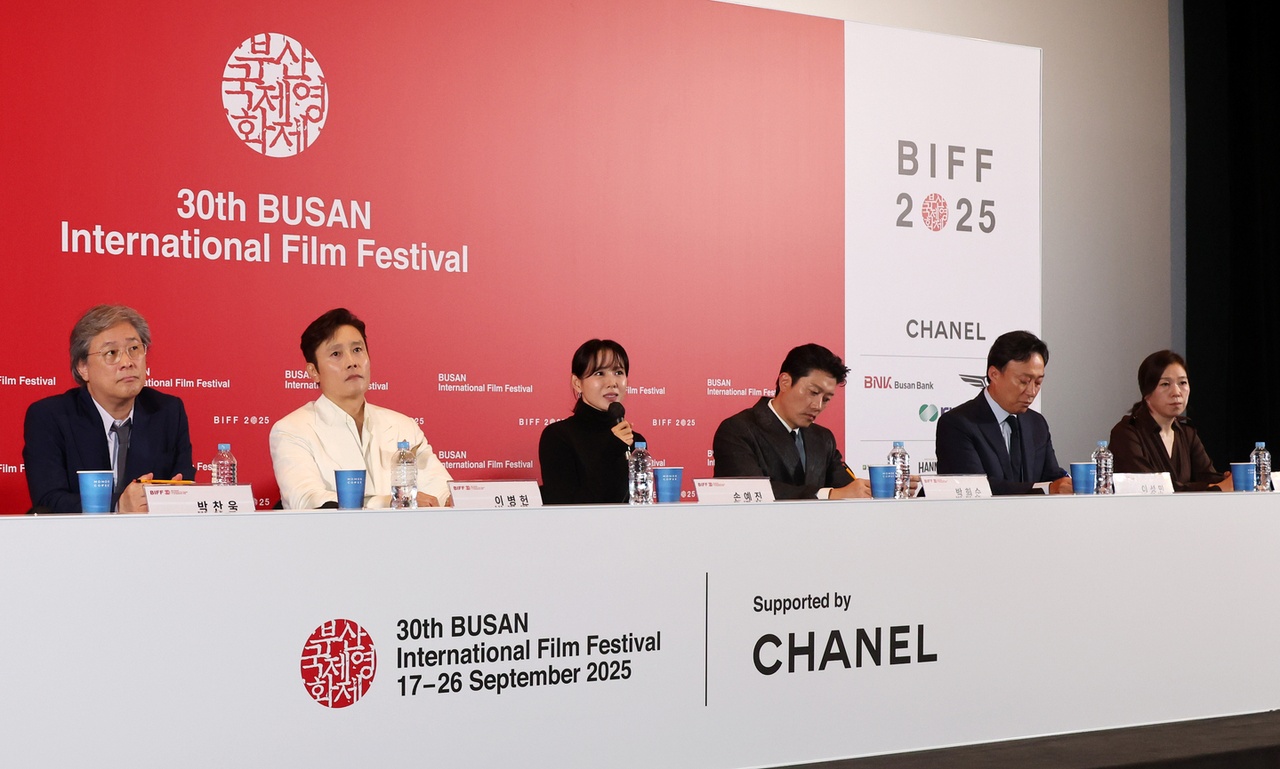
The film follows Man-su, portrayed by Lee Byung-hun, a middle-aged man who is abruptly laid off from his company and resorts to extreme measures in his desperate search for new employment. It features a seasoned cast, including Lee Byung-hun, Son Ye-jin, Lee Sung-min, Park Hee-soon and Yeom Hye-ran.
The black comedy is an adaptation of American writer Donald E. Westlake’s 1997 novel "The Ax.” Director Park shared that he was drawn to the novel immediately, seeing potential to transform it into a story that intertwines personal and social narratives.
“I saw the possibility of making a film where a personal story and a social story are completely intertwined, allowing it to look both inward and outward,” the director said. “Adding to that, what begins from a pure motivation — the protagonist wanting to protect his family and continue working in his profession — gradually leading to moral corruption, was something I wanted to delve into further.”
Despite the novel being released in the 1990s, Park noted that its core message transcends time and place, saying the story and our current society hardly differ, at least fundamentally.
“When I first thought of telling this story, I felt it wasn’t one of those subjects that lose their urgency if not tackled right away. Instead, I believed it was something that, even as time passes, people would continue to see as their own story or the story of their neighbors,” he said.
However, he did give it a modern twist by incorporating the topic of AI, stating that he wanted to weave into the film a sense of confusion, where the future feels uncertain and unpredictable.
He also mentioned that he naturally added a Korean cultural layer as the film shifts to Korea, unlike the original novel, which is set in the United States.
“As the setting was changed to Korea, I tried to add elements like the obsession of having a house and how the lingering influence of patriarchy brings out Man-su’s limitations and follies,” director Park said.
“That’s why I believe Korean audiences, more than anyone else, will be able to understand, empathize with, and even shake their heads at his story.”
Following high praise overseas and marking Park’s first directorial feature project in three years since “Decision to Leave” (2022), expectations are high for the film to help revive Korea’s struggling theater and film industry.
Park recognized such a situation and said, “It’s true that the film industry is going through a tough time right now, and in particular, Korea seems to be recovering more slowly than other countries since the pandemic, which I feel after talking to people outside of Korea. But I don’t think we’ll stay in this situation forever. I just hope our film can play even a small part in helping the industry climb out of this slump.”
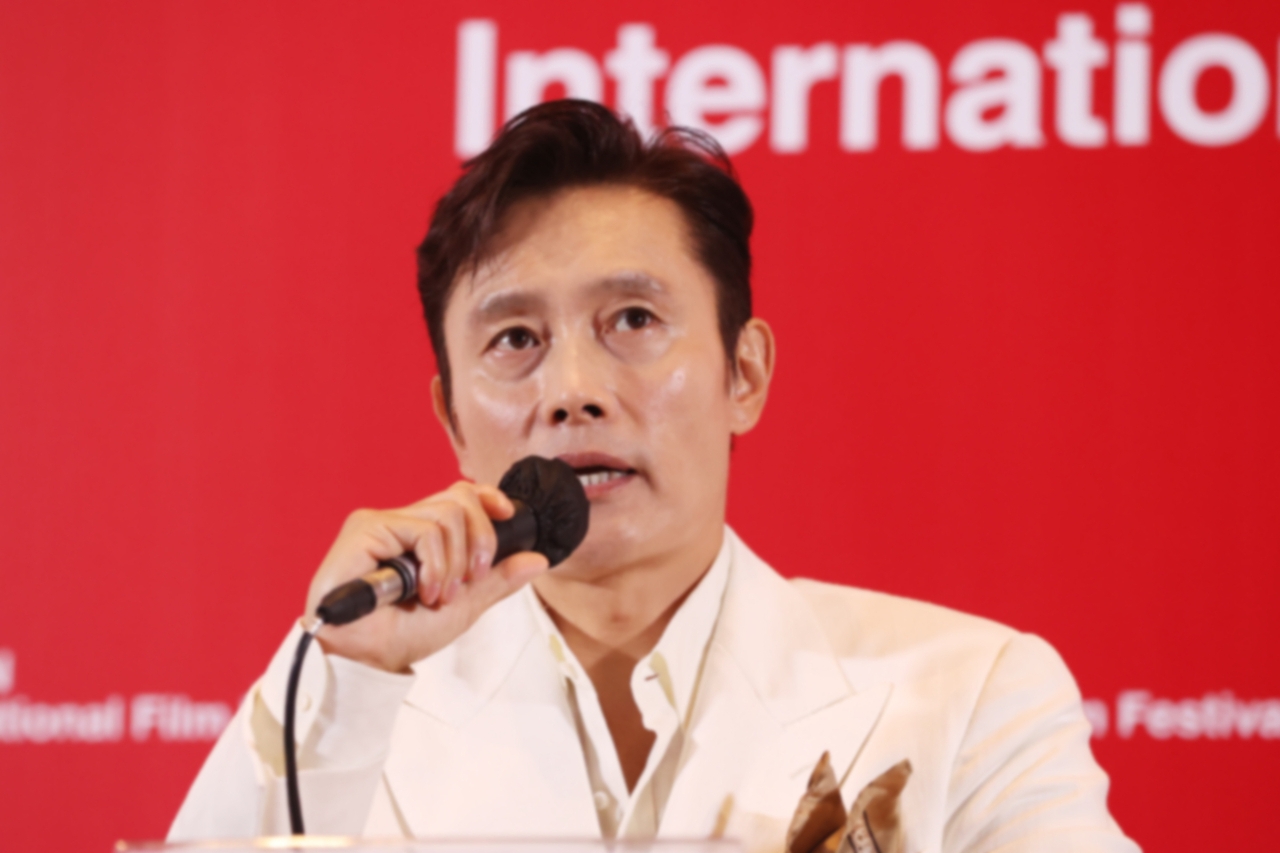
The cast encouraged audiences to see the film in theaters, emphasizing its depth and director Park’s meticulous attention to mise-en-scène.
“As an actor who worked on this project for a long time, I thought I knew everything about it, but watching the film a second and third time felt completely different,” said Lee Byung-hun.
“There are so many details in the director’s mise-en-scène that even I hadn’t noticed at first and found out when watching the film again, which made me realize why he gave such directions. I truly believe that it’s worth seeing on a big screen in a theater to see those details.”
Son added, “I recommend watching the film at least twice.”
“No Other Choice” is set to be released in Korean theaters on Sept. 24.
BY KIM JI-YE [kim.jiye@joongang.co.kr]