Climate activists, lawmakers discuss how to 'turn K-pop concerts into low-carbon events'

Live performances are the lifeblood of the K-pop industry, and their value has only grown in the aftermath of the pandemic.
But as both stages and the number of people in the crowds grow larger, so does the elephant in the room: the carbon emissions and waste generated by large-scale concerts.
During a seminar at the National Assembly on Tuesday, Democratic Party Rep. Park Soo-hyun, a member of parliament's culture, sports and tourism committee, acknowledged the “new challenges for the [growing] K-pop industry,” from “a massive moment of fans that can disrupt a whole city's transportation flow” to “colossal stages installed for only a few days” and “unforeseen issues related to safety and the environment.”
“As the influence of K-pop expands, we are aware of the increasing international demand for sustainable management standards,” the lawmaker continued. However, he also stated that potential regulations should not hinder K-pop’s global growth, despite rising production costs and intensifying competition.
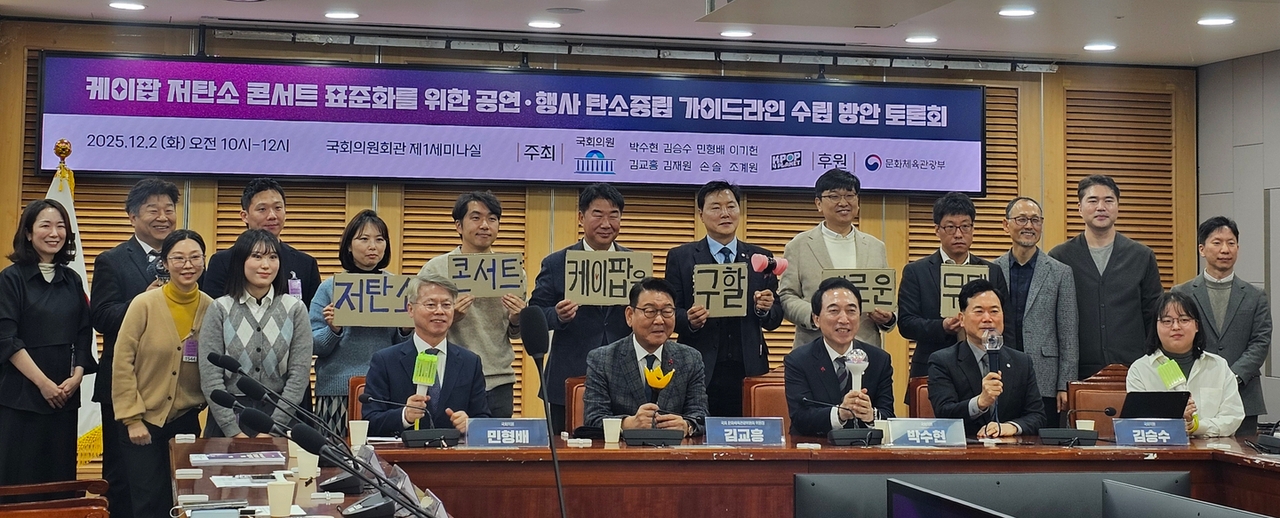
The seminar — hosted by a fan-led international climate activist group, Kpop4planet, and eight lawmakers, including Park, across the political spectrum — focused on establishing carbon reduction guidelines for live performances.
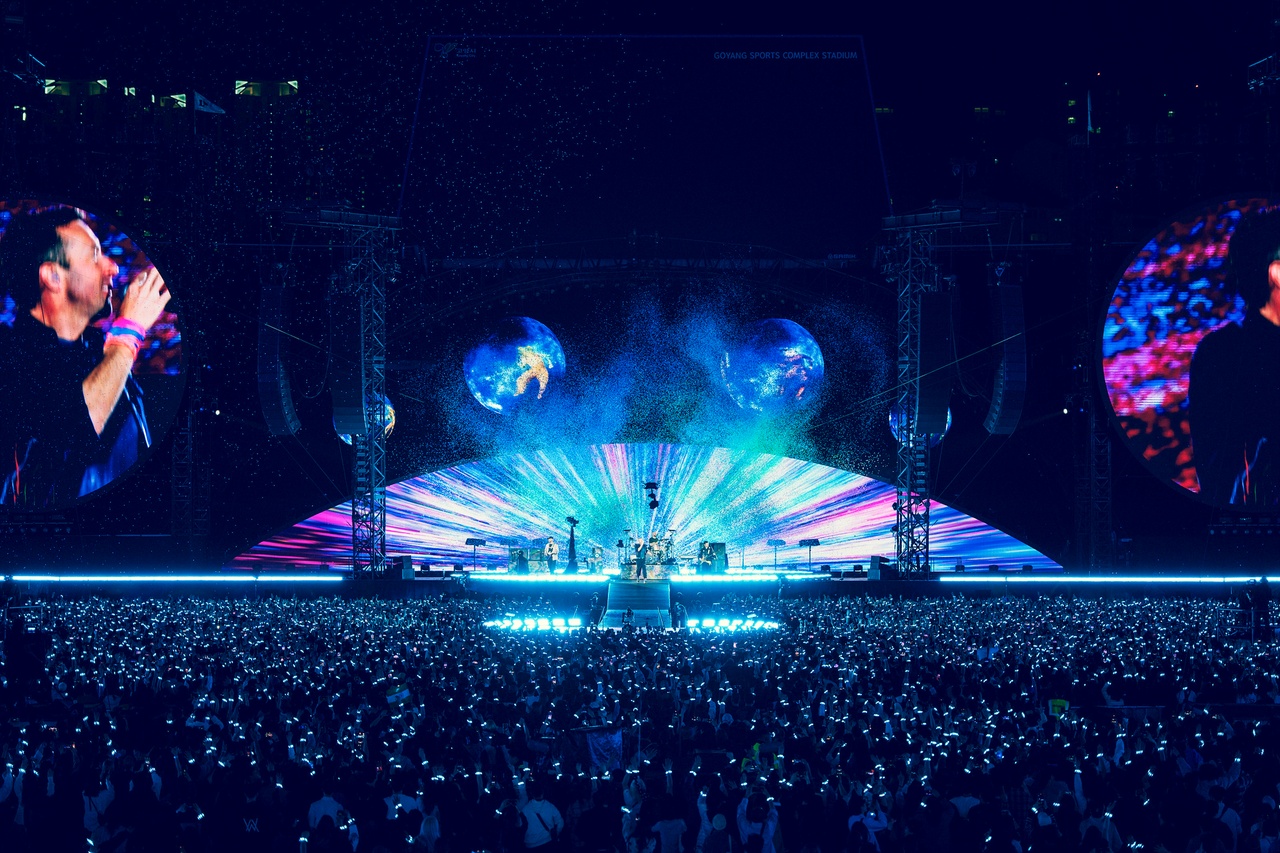
Two recurring case studies during the two-hour discussion were Coldplay’s “Music of the Spheres” and Blackpink’s “Deadline” world tours. The former encouraged concertgoers to return their reusable LED wristbands, banned single-use plastic water bottles and installed bicycles that fans could ride and kinetic floors that they could jump on to generate electricity to power the show. The latter measured the carbon emissions generated by its concerts and then purchased peace renewable energy credits to offset that amount.
Kpop4planet activist Kim Na-yeon cited research published by the British nonprofit climate activist group Julie's Bicycle from 2008 in her keynote address. Julie's Bicycle found that live concerts were the largest emitter in the United Kingdom’s music industry, accounting for 73 percent of total carbon emissions in 2007, with over 400,000 tons emitted — equivalent to the yearly emission of 92,000 gasoline cars — while albums accounted for 26 percent.
As global emissions from concerts have likely grown significantly since 2007, Kim stressed, “In today’s landscape, in which the climate crisis has already infiltrated daily life, turning concerts into low-carbon events means more than reducing emissions [because this change] can lead to a massive wave that reshapes how fans, and ultimately society, perceive and respond [to climate issues].”
In a recorded presentation, Kurt Langer, the vice president and a board member of Music Sustainability Alliance, pointed out that adopting low-carbon technology “isn't just an ethical decision but also a smart, forward-thinking business strategy.”
“K-pop has a massive global reach and cultural influence, with devoted fans and deep industry resources, [capable of] rapidly [scaling] low-carbon concert practices worldwide,” said Langer.
BY SHIN HA-NEE [shin.hanee@joongang.co.kr]