For 'KPop Demon Hunters' director Maggie Kang, the key was 'Koreanness'
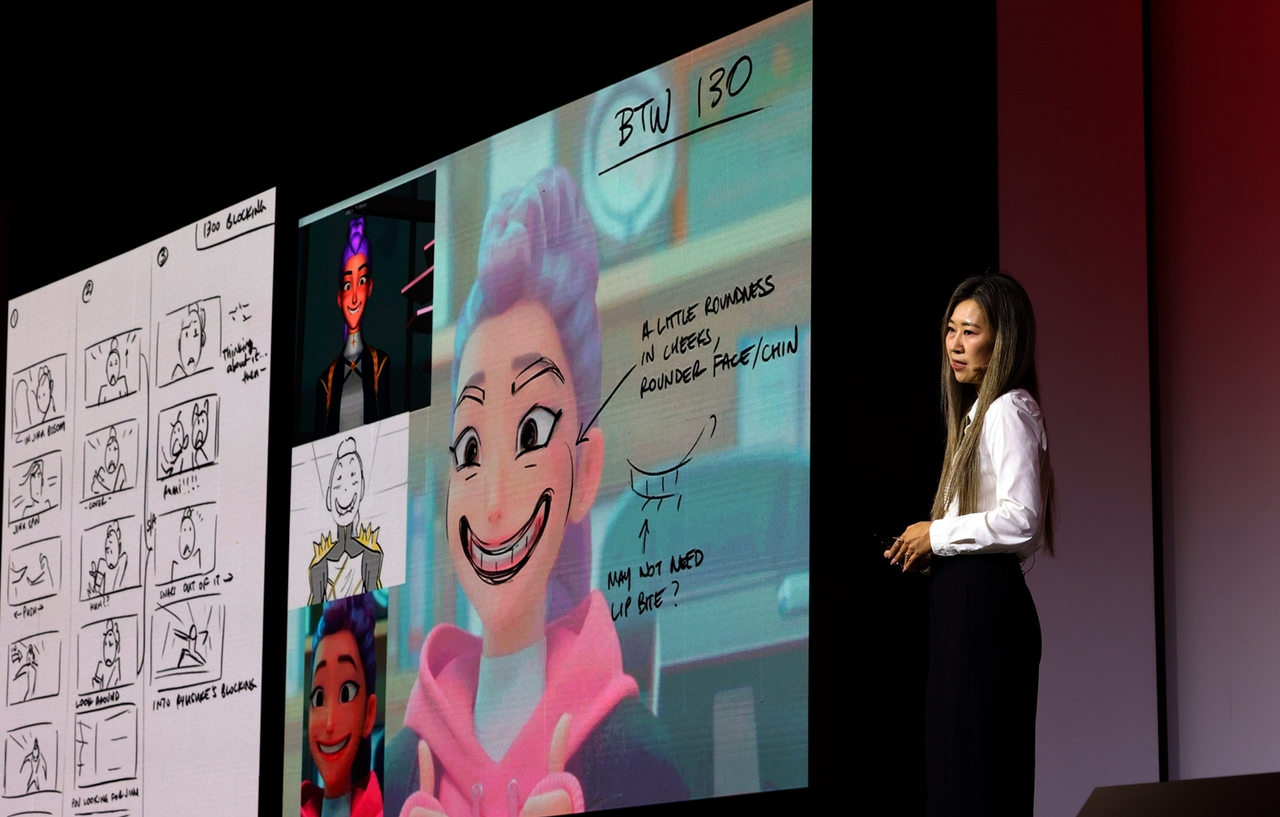
When “KPop Demon Hunters” director Maggie Kang attended a BTS concert, she experienced the kind of community, or the sense of belonging, that K-pop thrives on.
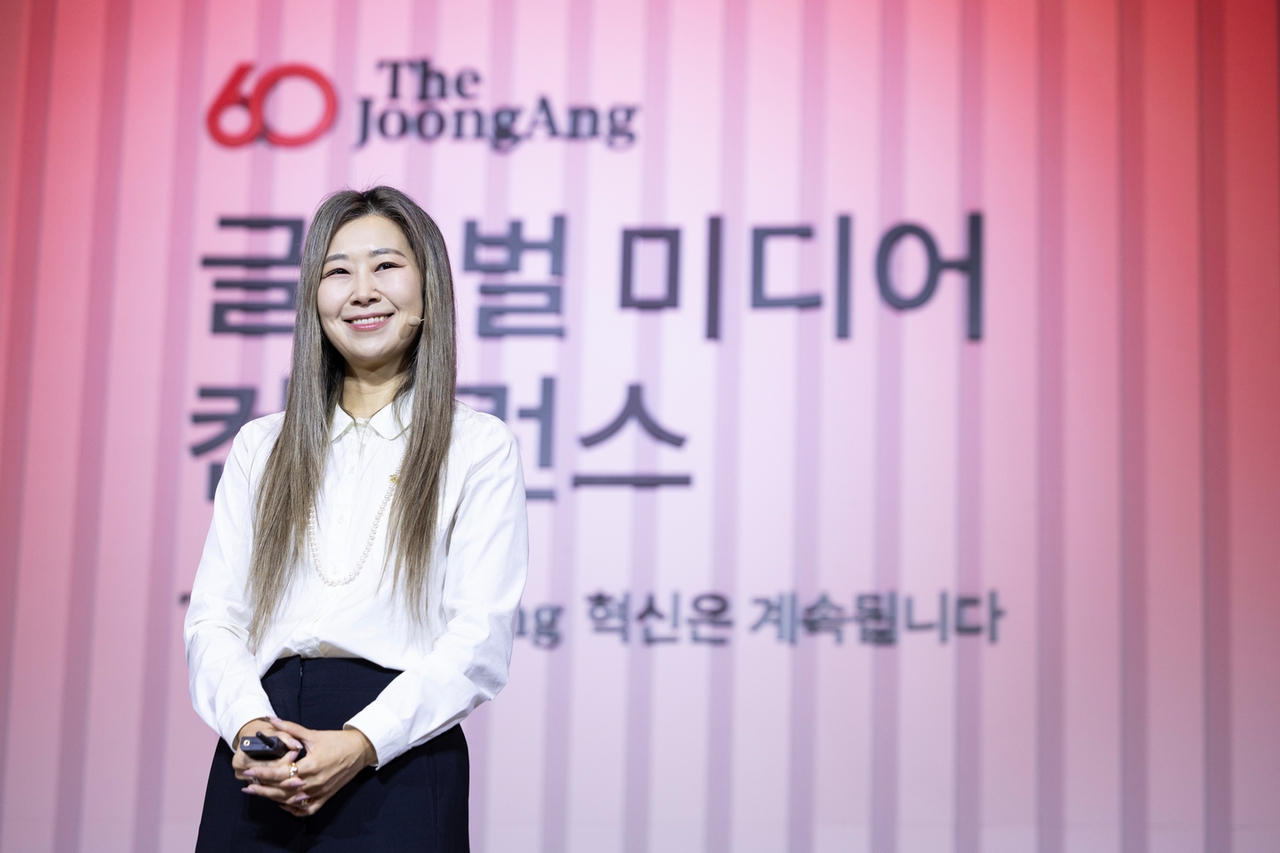
“I was amazed to see 50,000 fans just sing along to the lyrics of a Korean song that I didn’t even know myself,” she recalled at the JoongAng 60th Anniversary Global Media Conference held at the Lotte Hotel in central Seoul on Thursday.
“I wanted to create something that celebrated that feeling of […] coming together,” she said. “There was already this cultural, global phenomenon that broke the barriers of different cultures.”
That made K-pop, a global phenomenon in its own right, the perfect “last ingredient” for creative flair in Netflix’s latest global sensation, “KPop Demon Hunters,” according to Kang.
But the director, who moved to Canada at the age of five, had a bigger mission — to create a film that captured the beauty of true Korean culture, something that she hadn’t come across even throughout her extensive career in Hollywood.
“I wanted to inject as many Korean references and elements into [the film] as possible, and make the movie as Korean as possible,” Kang said.
Kang and her creative partner Chris Appelhans co-directed “KPop Demon Hunters,” which wrote history as Netflix’s biggest hit ever, accumulating more than 300 million views around the world, the highest ever for any film or series, as of Wednesday.
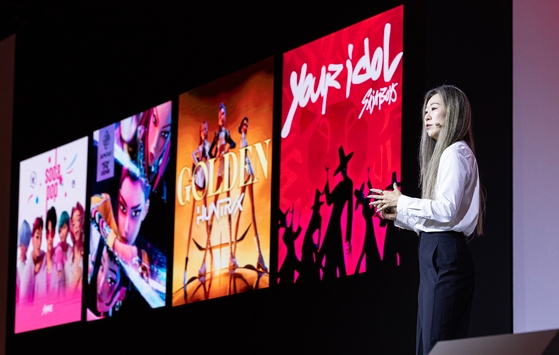
In her speech titled “The success of ‘KPop Demon Hunters’: K-pop becomes a narrative,” Kang said that she was determined to create an authentic representation of her cultural roots. And that commitment paid off, as the animated film is acclaimed for its rich and accurate portrayal of Korean culture.
The story itself began not with K-pop, but with Korean demonology, the director shared. From there, Kang imagined hunters.
“KPop Demon Hunters” follows Rumi and her bandmates Mira and Zoey of HUNTR/X, who balance everyday friendship and occasional silliness with charismatic performances and battles against demons. The characters are both relatable and aspirational — a reflection of Kang’s goal to create female Korean leads who are “appealing, aspirational, unique, but most importantly — Korean.”
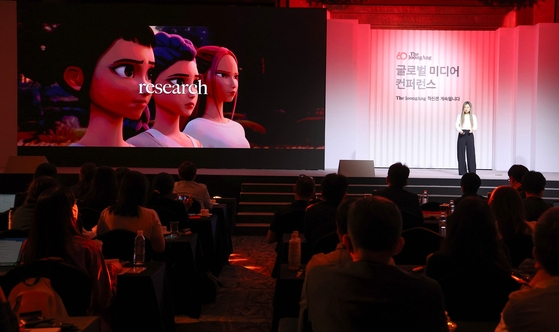
Authenticity was central to the film's production. The creative team traveled to Seoul to capture the city’s look and feel, while the soundtrack was designed to carry the "DNA of K-pop."
A soundtrack that fully embodies the film’s story and character development captivated global listeners, with the film’s standout track “Golden” topping the Billboard Hot 100 charts, to which Kang commented, “It’s still ‘going up, up, up,’ like the song suggests.”
As the HUNTR/X trio was presented as fashion icons, the production team also made Rumi, the main character, undergo 26 costume changes — a rare, if not unprecedented, feat for an animated film.
Kang described her crew as "fearless," eager to take on every challenge in every aspect of the movie, adding, "From the earliest days, we knew that we wanted to do something very different."
Under the theme “In an Age of Chaos, Hybrids Beyond Boundaries,” Thursday’s conference featured various speakers from the media and entertainment industries including director Bong Joon-ho, CNN CEO Mark Thompson, Studio N CEO Kwon Mi-kyung, Dramabox CEO Chen Ruiqing, Studio Slam CEO Yoon Hyun-joon and girl group i-dle's Jeon So-yeon.

Jeon, in her speech titled “When stars become creators: i-dle and the path of idols,” compared her and her group’s journey to that of a startup: surviving by leaning into its unique strength, which, for Jeon and i-dle, was her self-production capabilities.
That ability became a lifeline when the group hit what she called its "valley of death," Jeon confessed, indirectly referring to the time after former member Soojin left the team in 2021 amid school bullying allegations.
“The comment that particularly broke my heart was that ‘they withered before they even bloomed,’” she said. But the team came together, returning to their roots: a love of music. That led to “Tomboy,” i-dle's 2022 hit.
Jeon also addressed controversies she faced over her lyrics, saying, “Foregoing my freedom of expression to shy away from criticism means the death of art.”
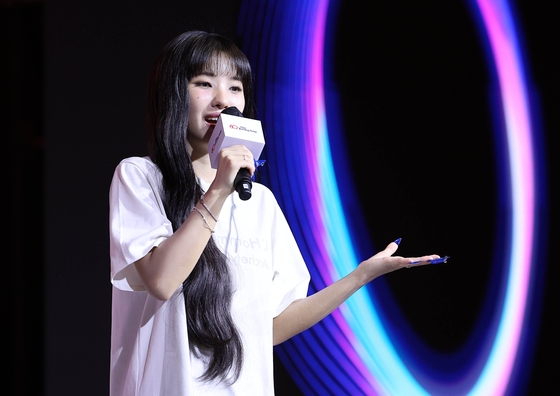
Jeon previously faced backlash over controversial lyrics in tracks such as “Wife” (2024), which drew criticism and online debate over its alleged sexual implications.
“K-pop is expanding well beyond its domestic market,” Jeon said. “I chose to express my own emotion and story as it is, and I believe that sincerity can transcend cultural barriers.”
BY SHIN HA-NEE [shin.hanee@joongang.co.kr]