K-pop veteran Big Bang returns as a trio to mark 20th anniversary
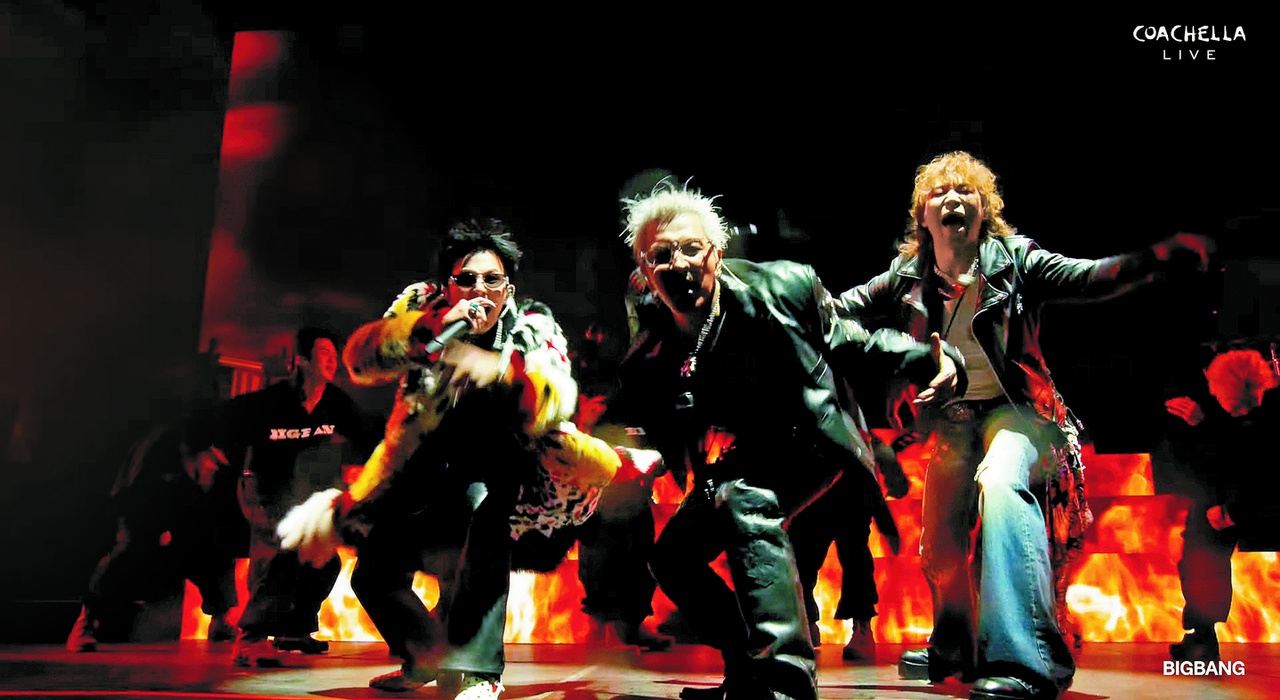
Veteran K-pop act Big Bang took the stage at the Coachella Valley Music & Arts Festival and drew a roaring crowd, making its mark as a three-member lineup.
The trio closed the show with an hour-long, 17-song set on the Outdoor Theatre stage at Coachella in Indio, California, on Sunday.
It was the members’ first activity under the name Big Bang since the release of “Still Life” in April 2022.
The set began with dancers wearing jackets and waving flags, both featuring symbols from the group’s past album “Made” (2016) — under red lighting.
As the intro to “Bang Bang Bang” (2015) came on, cheers erupted from the crowd, which only grew louder when G-Dragon, Taeyang and Daesung finally appeared on stage, marking 20 years since Big Bang’s debut.
The band, including its former rapper T.O.P, was invited to perform at Coachella in 2020 as a four-member act, but the event was canceled due to the Covid-19 pandemic.
“BigBang drew a huge crowd with a set long on sexed-up party jams and exposed abdominal muscles,” the Los Angeles Times reported.
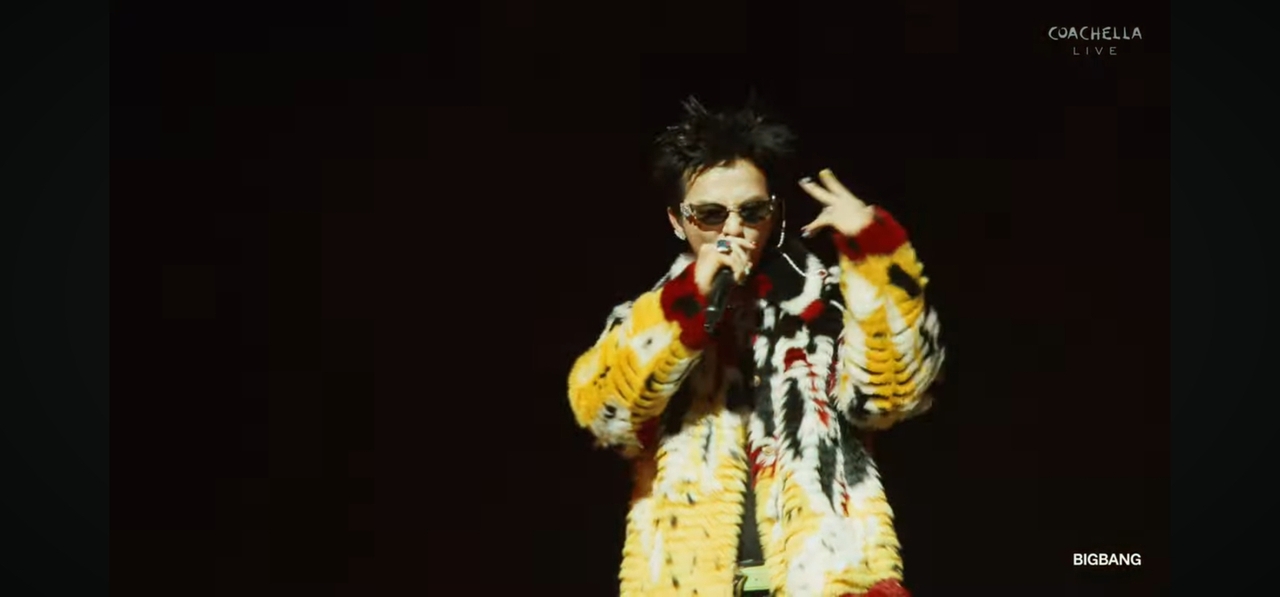
The group will perform once more on Sunday before commencing its 20th anniversary comeback activities this year.
Since debuting in 2006, Big Bang has maintained its popularity with hip-hop-influenced music that possesses both a strong, unique identity and broad appeal. As a result, the group is often described as the last “national idol” in Korea, referring to a group whose name and music are widely known to the general public, not just its fans.
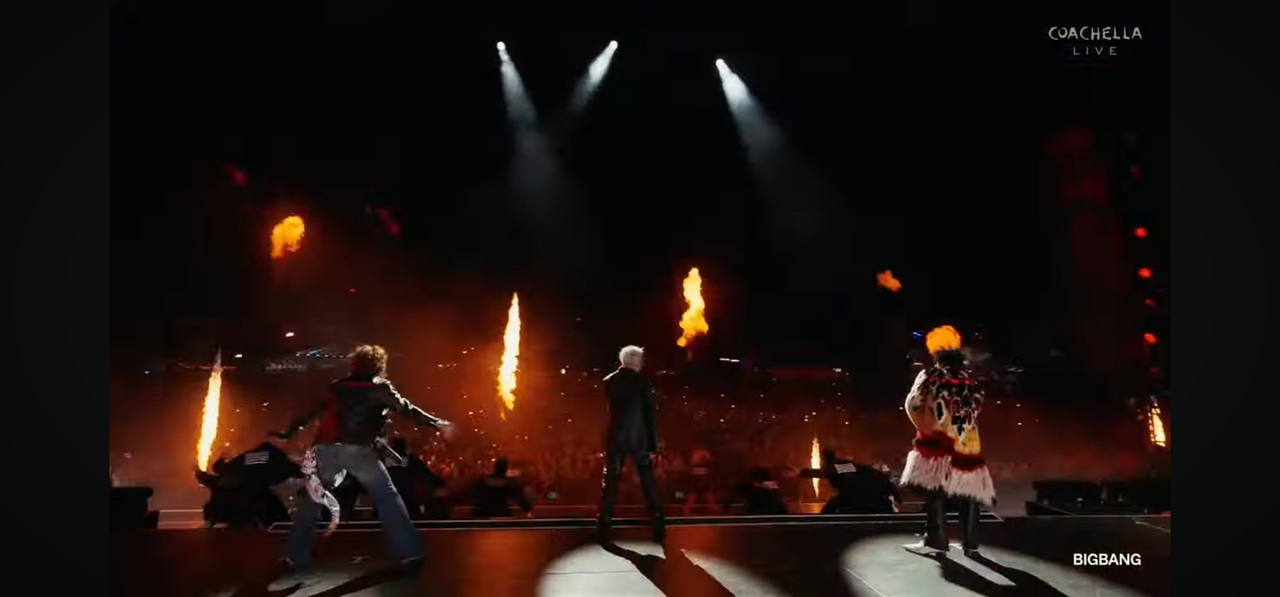
Big Bang’s hits — such as “Lies” (2007), “Haru Haru” (2008), “Fantastic Baby” (2012) and “Bang Bang Bang,” along with its 2008 remake of Korean singer Lee Moon-se’s “Sunset Glow” (1988) — are considered some of the most classic K-pop songs to this day. The group is also known for having a large male fan base, a more expected phenomenon for girl groups than boy bands.
“Big Bang’s signature ‘hip-hop swagger’ appeals to male fans as well, and its lyrics [...] reflect a uniquely Korean yet creative approach that drove its popularity,” music critic Lim Hee-yun said.
However, the band has also faced a series of controversies.

In 2017, its former member and rapper T.O.P was found to have smoked marijuana while serving as a conscripted police officer during his mandatory military service.
In 2019, the Burning Sun scandal — a case involving allegations of drug distribution, sexual crimes and police corruption that was tied to a nightclub linked to former member Seungri — dealt a severe blow to the group’s image.
After Seungri left Big Bang in 2019, T.O.P did the same in 2022, saying, “I don’t want to cause harm to the team.”
Momentum returned in 2024 when G-Dragon released his third solo album, “Übermensch,” and signaled Big Bang’s return as a trio with the album’s lead track, “Home Sweet Home (feat. Taeyang and Daesung)” (2024), which became a hit.
G-Dragon drew about 825,000 concertgoers across 39 shows during his “Übermensch” world tour last year — the largest scale achieved by a Korean solo artist. BTS’s J-Hope drew about 524,000 across 33 shows, and BTS’s Jin drew about 353,000 across 20 shows during the same period.
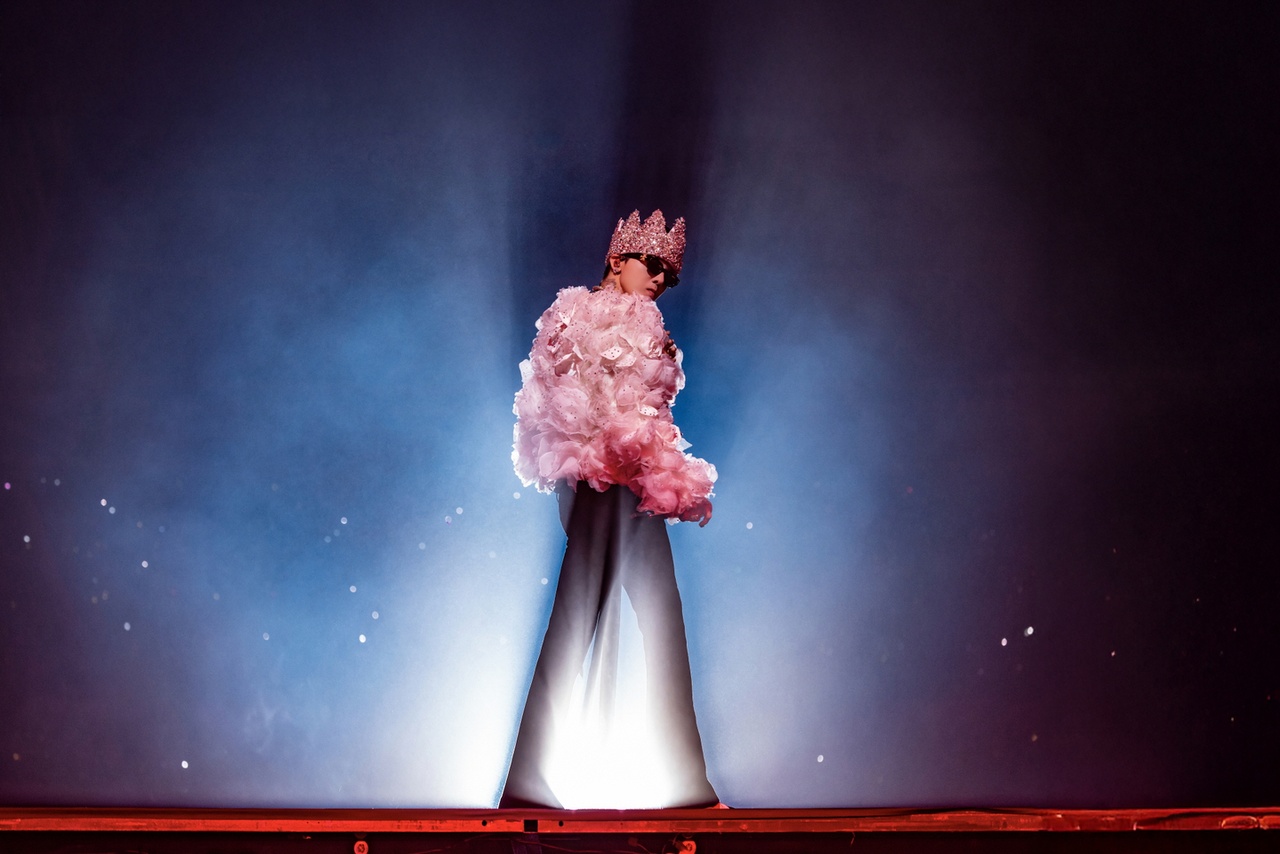
Big Bang also left a significant mark on K-pop history as a pioneer of "artist idols,” with all members participating in the production of the albums.
“K-pop idols were once criticized as factory-made groups known for synchronized choreography, but Big Bang expanded the identity of idols as artists,” pop culture critic Jung Deok-hyeon said.
Additionally, G-Dragon’s work as an ambassador for the French luxury brand Chanel served as an early example of a trend in which idols act as global ambassadors for luxury brands.
The spread of “newtro” trends — which combines the words “new” and “retro” and revisits styles from the mid-2000s to early 2010s — among younger audiences in the United States has also worked in Big Bang’s favor, with “Made” now considered a K-pop classic.
Teenagers who were unfamiliar with Big Bang were also exposed to the group through G-Dragon’s song “Home Sweet Home,” which gained popularity last year through short-form video challenges on social media.
“Overseas K-pop fans today are also interested in the fact that Big Bang was more popular in Korea than BTS,” Lim added.
This article was originally written in Korean and translated by a bilingual reporter with the help of generative AI tools. It was then edited by a native English-speaking editor. All AI-assisted translations are reviewed and refined by our newsroom.
BY JEONG EUN-HYE [lee.jiwon10@joongang.co.kr]