[WHY] Has the Korean market become optional for K-pop?
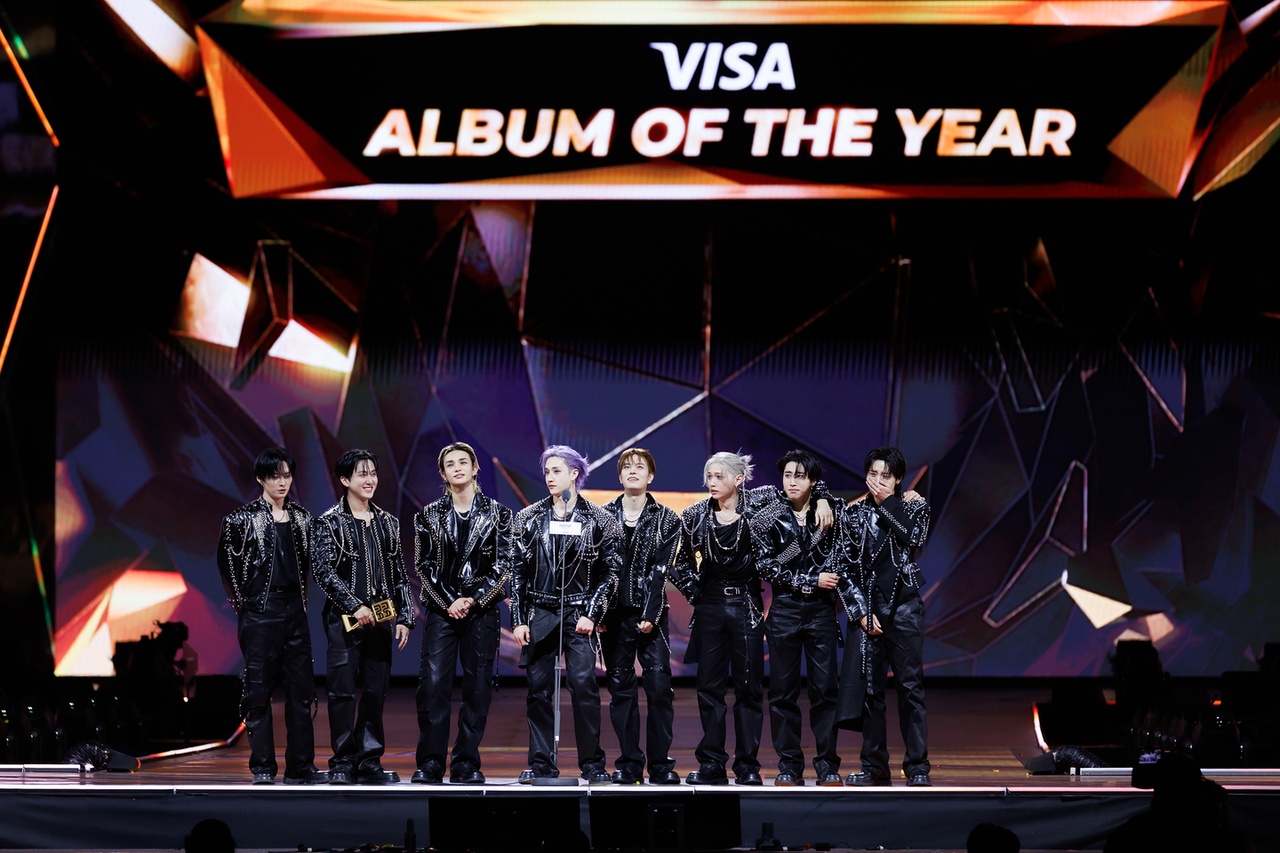
There is little debate that boy band Stray Kids stands among the most commercially formidable acts in contemporary pop. The group has sold out stadiums from Los Angeles to Paris, sells millions of album copies, made history as the first act ever to debut eight consecutive albums at No. 1 on the Billboard 200 and recently ranked second on the International Federation of the Phonographic Industry’s Global Artist Chart.
And yet, at home, a familiar question lingers alongside each new milestone: will Stray Kids ever score a true domestic hit — one that drifts from Seoul’s taxis, streets and stores like the country’s everyday soundtrack?
The question is not necessarily about one group, but a shifting national mood in general. While K-pop’s global presence has wildly expanded, Korean listeners, especially casual ones, appear to have been drifting away from idol music, a trend that has been debated by industry observers for several years now.

But how consequential is that drift? If overseas revenue is what increasingly drives the business, how much does the domestic market really matter?
On paper, the answer seems straightforward. Exports of K-pop albums and overseas tours account for a substantial — often majority — share of major agencies’ earnings, not to mention the global scene’s much bigger room for growth than Korea’s limited market size. Yet the matter might not be that simple, as culture is not something that is governed solely by accounting logic, industry insiders say.
Are Koreans losing interest in K-pop?
If last year’s music industry metrics were anything to go by, the answer may be yes, though the shift is as much felt as measured. Songs that accumulate hundreds of millions of views on YouTube do not always enjoy broad name recognition among the general public, unlike the cross-generational hits that once defined the idol era.
Several different factors, both global and domestic, came into play: increasingly fragmented content consumption habits, a diversifying streaming landscape and a strategic pivot by K-pop agencies toward cultivating core fandoms rather than courting casual listeners.
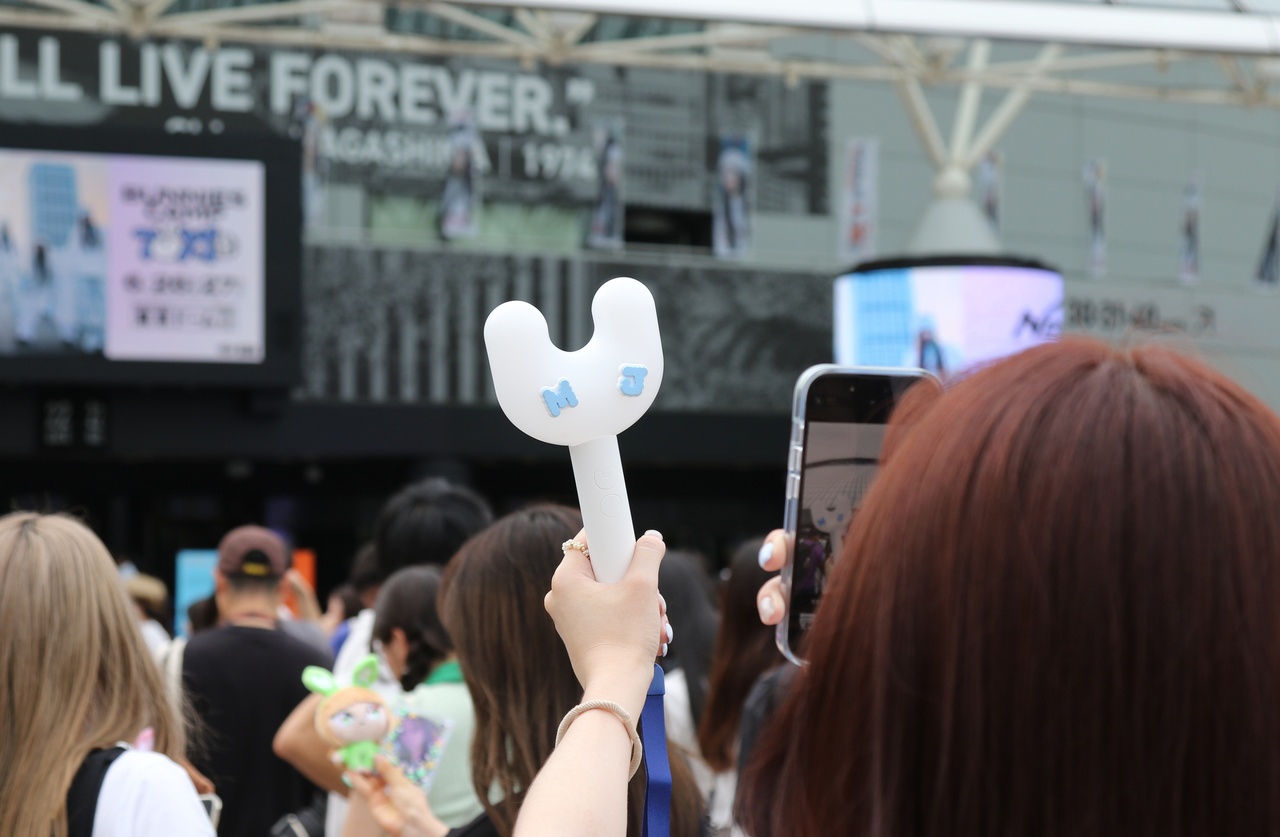
Korea’s album sales export rose 3.4 percent on year in revenue last year, reaching a new peak at $301.7 million, with Japan, China and the United States as the three biggest importers, according to Korea Customs Service. However, total album sales figures declined by 7.5 percent, marking a second consecutive annual drop, weighed down by shrinking domestic demand even as exports climbed.
Girl groups, which used to dominate local streaming charts earlier in the decade, have seen their market share narrow. According to data from the Korea Music Content Association’s chart data platform Circle Chart, five idol groups — aespa, NewJeans, IVE, Big Bang and BoyNextDoor — ranked among the top 10 artists across the 400 most-streamed songs last year, with a combined market share of about 14.1 percent. In 2024, six teams — NewJeans, aespa, IVE, i-dle, Le Sserafim and Riize — made it into the list, accounting for 21.7 percent.

On the domestic streaming platform Melon, singer-songwriter Woodz topped the annual chart with his 2023 hit "Drowning," boosted by a viral live performance video. Aside from aespa's "Whiplash" (2024) and G-Dragon's solo tracks, other most-streamed songs include singer Hwang Ka-ram "I'm Firefly" (2024) and Zo Zazz's "Don't you know" (2025), notably domestic hits with relatively little global traction. Among the 100 most-streamed songs, the number of “dance” tracks — a category encompassing most idol releases — within the top 100 most-streamed songs slipped from 45 to 38.
Why the mood shift?
Circle Chart’s music data journalist Kim Jin-woo attributed the shift to the rise of soloists like Woodz and Zo Zazz on the streaming market, the relative absence of popular rookie girl groups, and the high-profile absence of NewJeans in his July report. He also pointed to a subtler fatigue, described as “domestic listeners’ exhaustion with K-pop’s increasingly global-oriented strategy, shown in a noticeable increase in English lyrics.”

Many industry observers have pointed out that K-pop’s rapid global rise, led by BTS in the mid-2010s, has paradoxically loosened its grip at home gradually, as artists and agencies have focused on nurturing core fandoms — which are the key revenue drivers — rather than appealing to the casual listeners who might stream a song but never buy a light stick.
“As Korean listeners’ interest in idols has been declining significantly, storytelling has become a more integral part of the branding,” said music critic Lim Hee-yoon, suggesting narratives and marketing — rather than songs — gained significance in idol music promotions.
Meanwhile, the rise of global platforms such as YouTube Music and Spotify has eroded Melon’s once-dominant market share, accelerating the fragmentation of listening habits and taste.

Does the Korean market matter?
Numerically speaking, Korea still accounts for a considerable portion of major agencies’ revenue, especially in album and streaming profits. Yet the relatively small domestic market has begun to show signs of saturation with slower demand, reflected in consecutive declines in album sales, and its growth potential is limited compared to the global market.
From January to September last year, overseas revenue accounted for more than half of the total revenue at almost every major agency except SM Entertainment. Global sales accounted for 59 percent of revenue at HYBE, 60 percent at JYP Entertainment, 51 percent at YG Entertainment and 35 percent at SM Entertainment.

And for smaller agencies, breaking through overseas has become less forbidding than competing in the crowded domestic scene dominated by much bigger powerhouses, leading to smaller acts putting greater focus on overseas promotions.
However, domestic success still matters — partly because it confers legitimacy while also anchoring K-pop to the society that produced it.
“Domestic success is still integral,” said K-pop agency Beat Interactive CEO Kim Hye-im. “K-pop is rooted here. Something Korean that is not really popular in Korea being popular in the United States feels unnatural.”
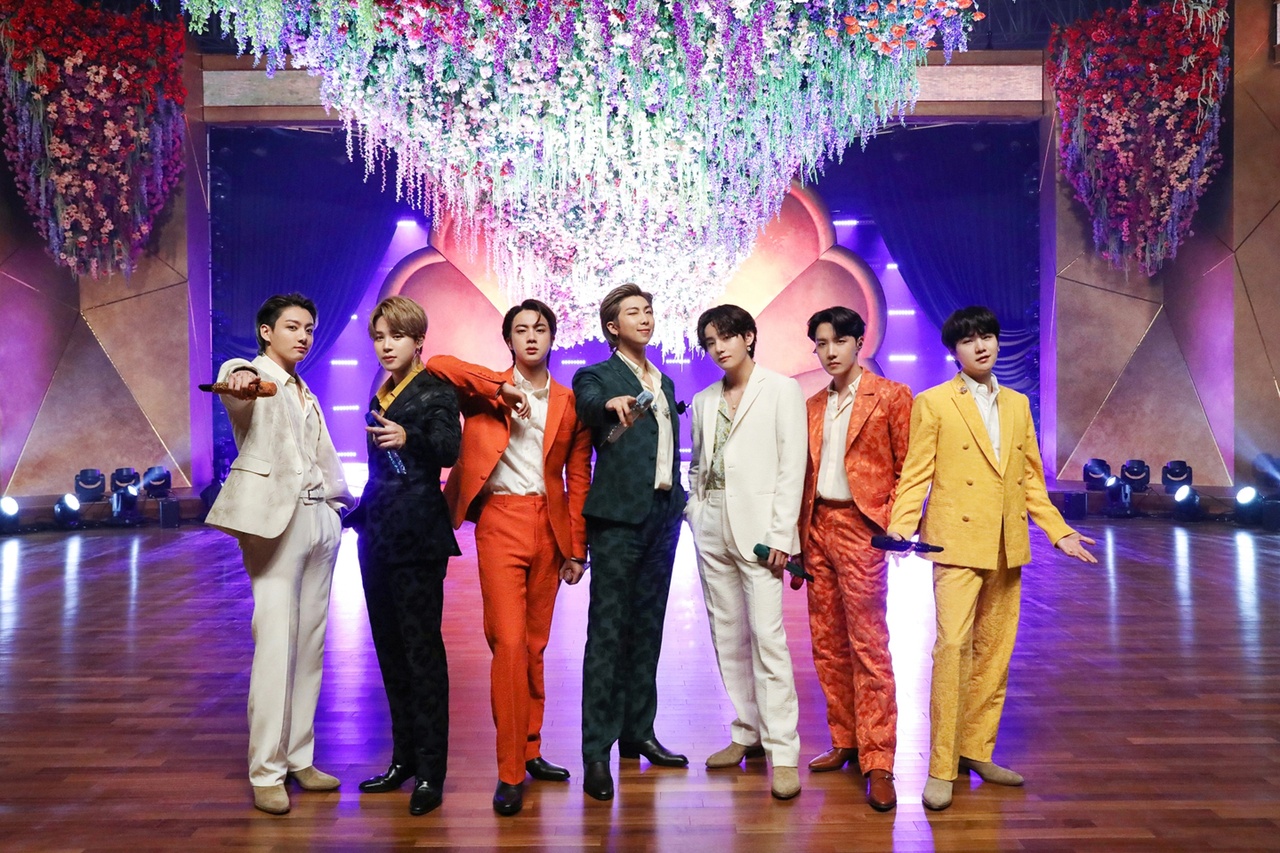
Yet the entry barrier has become higher in Korea for smaller agencies, she noted, as the market became more conservative with the public gravitating toward established names.
Michelle Cho, CEO of Singing Beetle, expressed a similar view in an interview last year with the Korea JoongAng Daily.
“K-pop started in Korea, and having something like a, say, certification mark at home certainly helps when promoting overseas,” Cho said.
Domestic promotional activities such as weekly music show appearances — a longstanding tradition in the idol system — remain a crucial gateway for global fans discovering new acts, she added. “It’s a nice pair of shoes, or a faster bike to ride on, when making overseas ventures.”
BY SHIN HA-NEE [shin.hanee@joongang.co.kr]