How 'The Great Flood' climbed Netflix's charts despite negative reviews
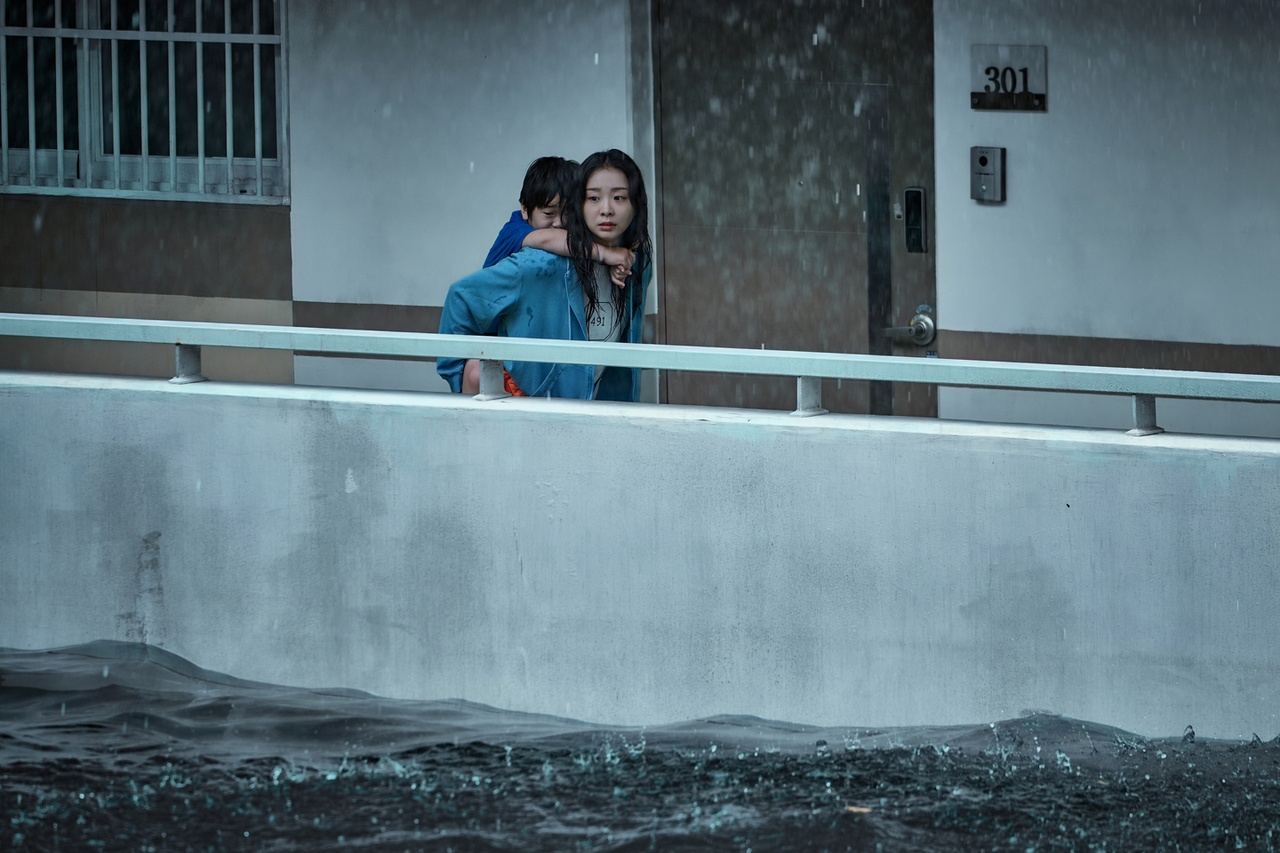
In an evolving landscape of streaming viewership, negative reviews no longer equate to failure as they once did with theater releases. At least not for Netflix's recently released feature "The Great Flood" (2025), which is unexpectedly gaining global traction.
The natural disaster film “The Great Flood,” released on Dec. 19, 2025, had drawn largely lukewarm reactions, particularly from the Korean audience. The film received a 4.19 rating out of 10 on Naver, one of the nation’s largest online portal sites, as of Jan. 5.
Despite such negative responses, the film topped Netflix's global Top 10 chart in the non-English film category for two consecutive weeks, according to the streaming platform on Wednesday. It also ranked in the Top 10 in 92 countries, including 53 nations where it placed No. 1.
This disconnect between public sentiment and chart results has raised questions over the weakening correlation between critical evaluation and commercial performance — a phenomenon that's become increasingly visible in the streaming era.
Flooding negative comments
The film has received particularly negative reviews from the Korean public, with more than 60 percent of its Naver ratings in the one- to two-point range.
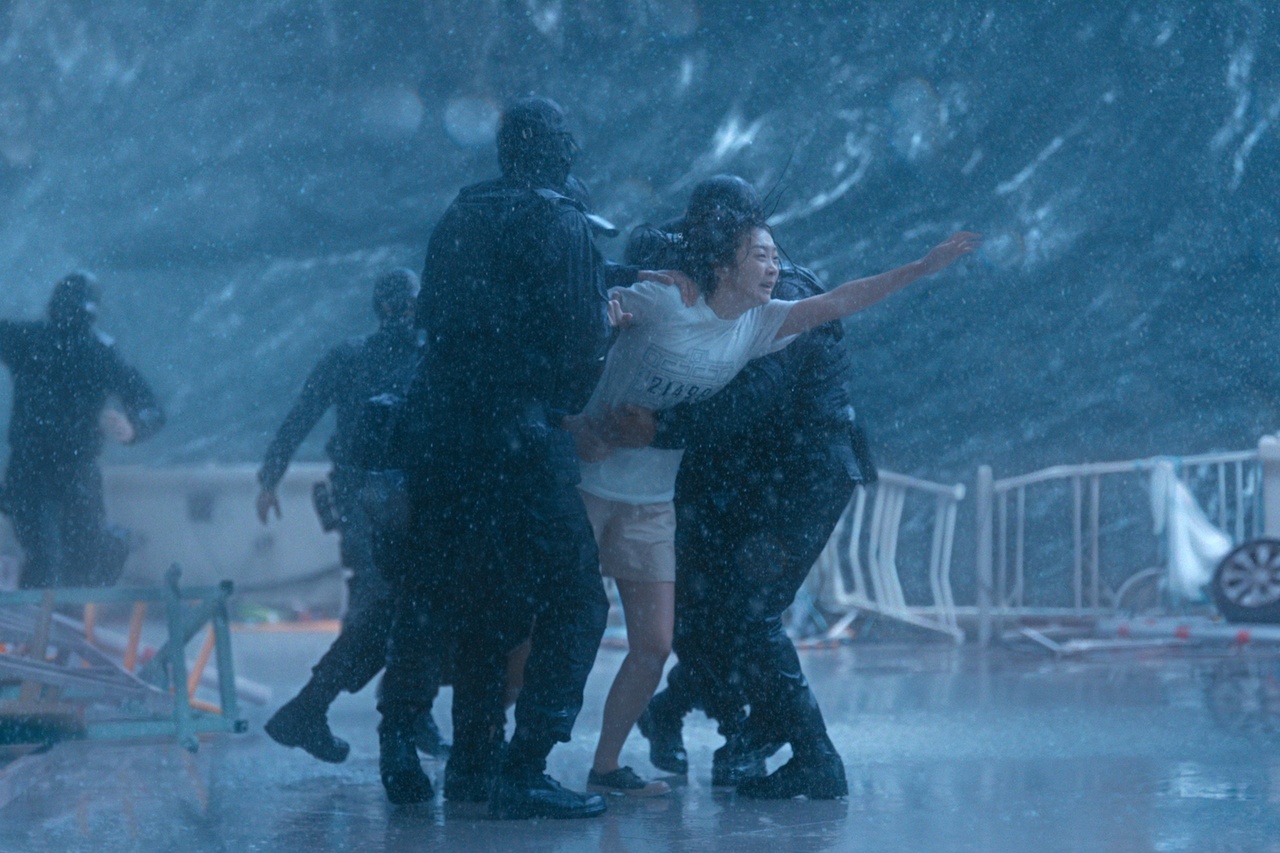
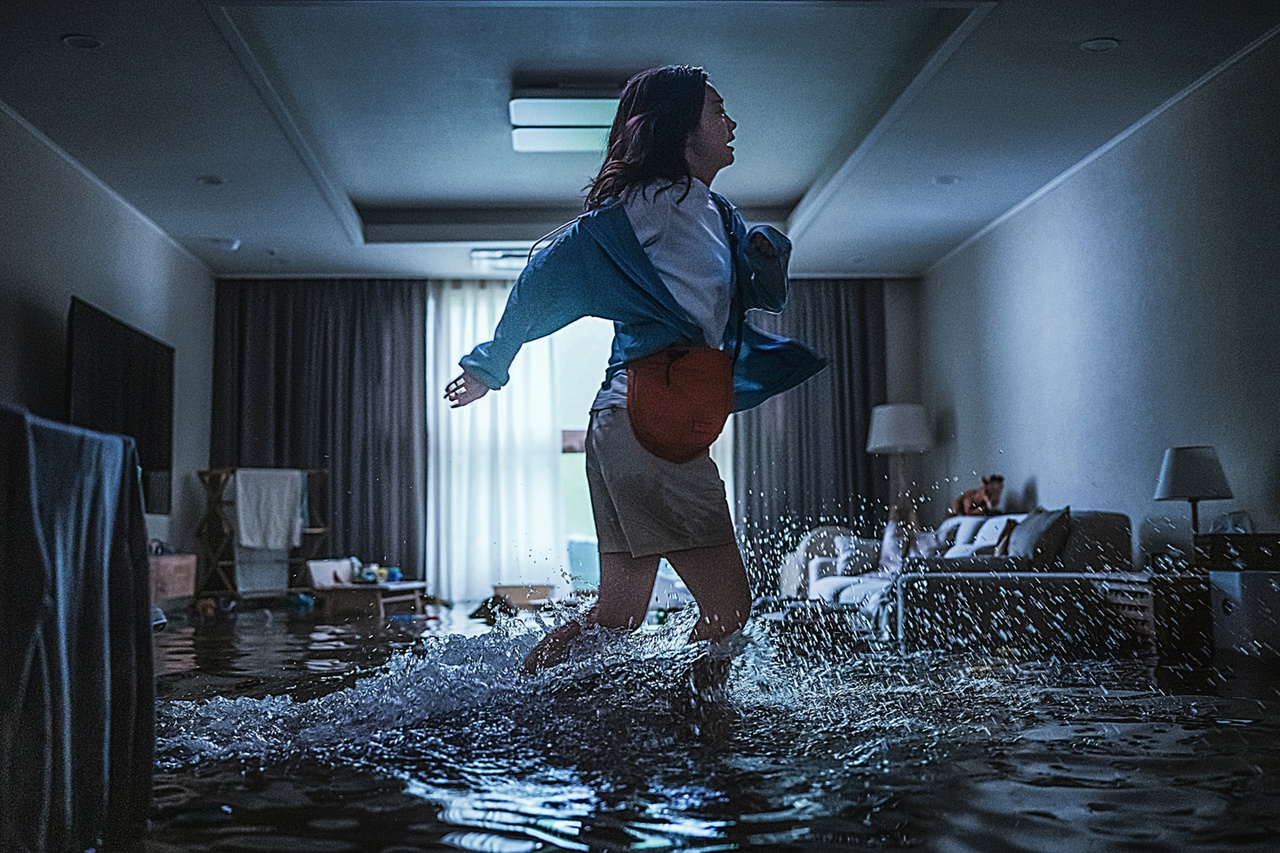
Directed by Kim Byung-woo, who also helmed films like “The Terror, LIVE” (2013) and “Take Point” (2018), the sci-fi disaster film follows a researcher and her young son trapped in an apartment complex during a catastrophic flood on the final day of Earth. Their survival becomes a crucial mission as the fate of humanity becomes tied to their escape. It features actor Kim Da-mi, Park Hae-soo and Kwon Eun-seong.
One Naver comment, which gave it two points, said, “A boring film that steals the audience’s time is a crime.” The comment garnered over 4,800 likes. Other comments were similarly unsparing, including remarks such as, “I would like to express my regret to the film’s investors,” “For a movie like this, the least it can do is make sense” and “It’s not ‘The Great Flood,’ it’s a great disaster.”
Overseas responses, while still far from glowing, were comparatively a little more forgiving. The film earned a 2.5 out of 5 on Rotten Tomatoes and a 5.4 out of 10 on IMDb as of Friday, with scores hovering around the midpoint, reflecting a mixed to negative reception rather than outright rejection.
Variety, a U.S. entertainment media outlet, described the film as “an ambitious shotgun marriage of too many ideas that end up seeming underdeveloped and rushed within a conventional feature runtime” under the headline, “Seoul Gets Submerged in a Survival Tale That Eventually Goes Down a Confused Sci-Fi Wormhole.”
British news outlet The Guardian echoed a similar sentiment, calling An-na's narrative, played by Kim Da-mi, “an apologia, complete with cut-and-paste disaster imagery, for algorithmic entertainment.”

Still, amid the criticism, a subset of viewers supported the film, arguing against overly harsh judgment, while others pointed to broader shifts in audience habits, noting that films needing patience and interpretation may struggle in an era dominated by short-form, dopamine-driven content.
“Based on the opinions of people around me whom I trust, it may not be a standout work, but it’s solidly average,” said Korean-English translator Hwang Seok-hee, renowned for translating numerous hit films like “Deadpool” (2016) and “Spider-Man: Far From Home” (2019). “It’s like not something remarkable, but entertaining enough to watch.”
A Naver commenter who gave the film eight points wrote: “With everyone constantly consuming short-form videos and dopamine-heavy content, it feels like films like this just aren’t appreciated anymore. People seem to only look for action-comedy franchises like 'The Roundup' [2017-24] series these days. No one wants to think or try to understand anymore. Just movies you can watch passively, without having to engage.”
And it seems that director Kim had expected such divisive responses from the beginning. "It wasn’t made with the expectation that seven or nine out of ten people would like it,” he said in an interview last month.
He also added half-jokingly that he has “stopped reading comments since this [2025] summer,” considering the weak reception of his previous 30 billion won ($20.7 million) blockbuster “Omniscient Reader,” which premiered in July 2025.
Performance data tells a different story
In spite of the polarized — close to negative — response, performance data tells a different story. Viewing hours and performance data show that the film is doing well on Netflix's charts both globally and in Korea. The film’s chart performance remains strong, with 33.1 million views sitting at No. 1, far outpacing the runner-up, “A Time for Bravery,” which garnered 8.2 million views during the week from Dec. 22 to 28 of 2025.
Experts note that such a gap between evaluation and performance has become increasingly “natural,” as audience tastes grow more individualized. In other words, public response does not necessarily translate into global success.
“These days, people tend to be very upfront about their personal tastes, so if a film doesn’t really align with what they like, they express their dislike,” pop critic Jung Duk-hyun said.
Higher expectations may also explain the harsher domestic reaction. “Basically, overseas audiences aren’t watching it with especially high expectations, as Koreans do,” critic Jung said. “But for Korean viewers, they’re looking at it as a ‘Korean’ work, which raises the bar from the outset.”
However, the stronger vocal negativity driven by individualized tastes does not necessarily mean the film lacks broader appeal. Jung added that the strongly worded criticism from Korean viewers may represent only the visible layer of audience sentiment.
“Korean audiences tend to be more expressive when they dislike something,” he said. “But there are also many viewers who don’t voice their opinions at all. Some may simply think, ‘It was fine,’ and feel no need to comment.”
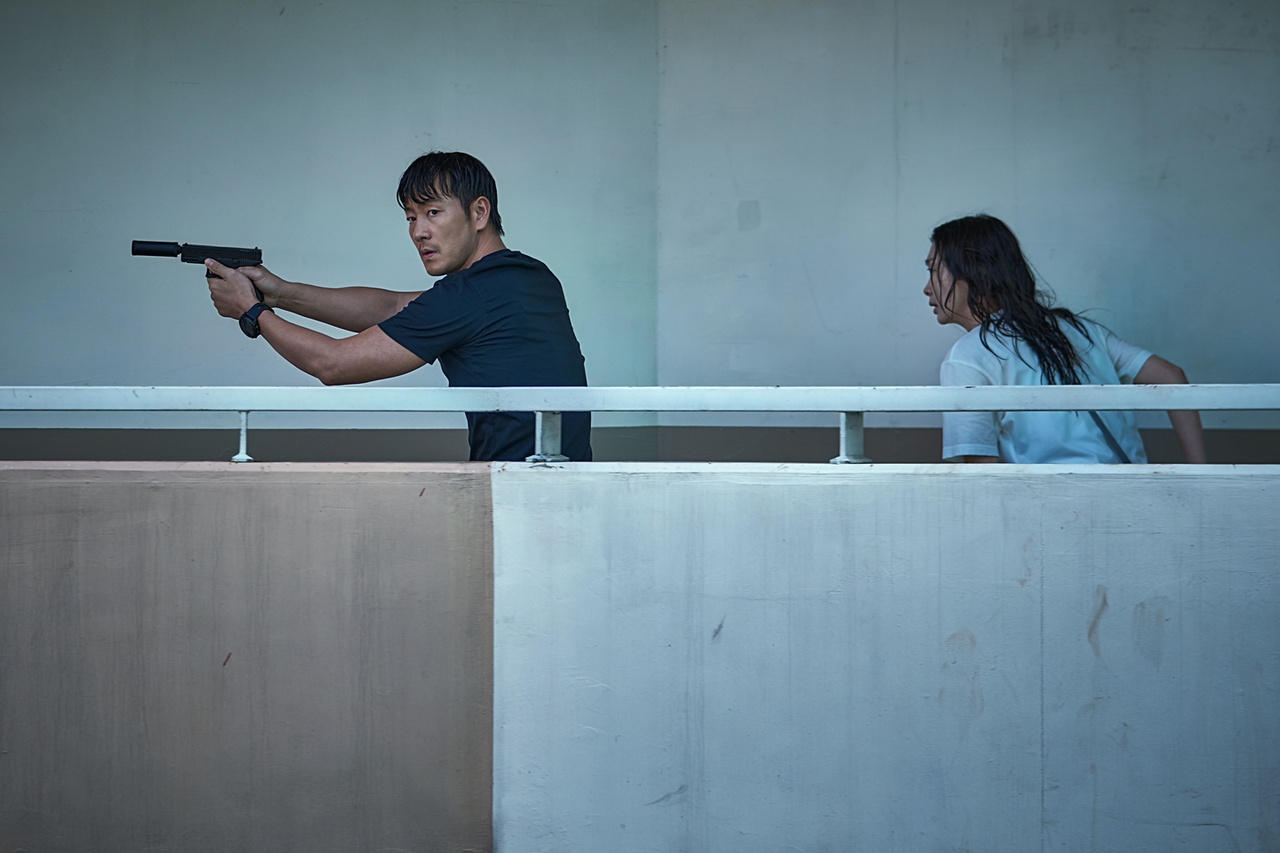
Another factor behind the film’s global success is its timing. The film benefited from a lack of competing blockbuster non-English Netflix originals at year’s end, making it a standout choice during the holiday season. At the same time, it aligns closely with Netflix’s broader global content strategy.
“The film delivers a certain level of what you might call ‘Netflix-style entertainment,’” Jung said. “Disaster films, by nature, have that immediate spectacle that grabs viewers' attention. But instead of sticking to a completely predictable disaster formula, the film slightly twists the genre and introduces something different. In that sense, it follows Netflix’s familiar strategy of working within universally recognizable genres while adding small points of differentiation.”
Pop culture critic Lee Moon-won echoed this view in a recent column, noting that similar disparities between public reception and chart performance have existed before, citing Netflix’s “Badland Hunters” (2024) that featured actor Don Lee as an example.
“Ultimately, this points to the fact that streaming platforms like Netflix are spaces where content that is light and instantly tells what kind of show or film they are tends to be favored by viewers,” Lee said.
“That is why comedy actors whose box-office clout has largely faded, such as Adam Sandler and Eddie Murphy, have become some of Netflix’s most popular figures because audiences have to be able to immediately recognize what kind of film they are getting, simply from the casting and the poster alone. In that sense, ‘The Great Flood’ also appears to be benefiting, in its own way, from its streaming platform-friendly dynamic.”
BY KIM JI-YE [kim.jiye@joongang.co.kr]