How BTS won over a generation K-pop never expected
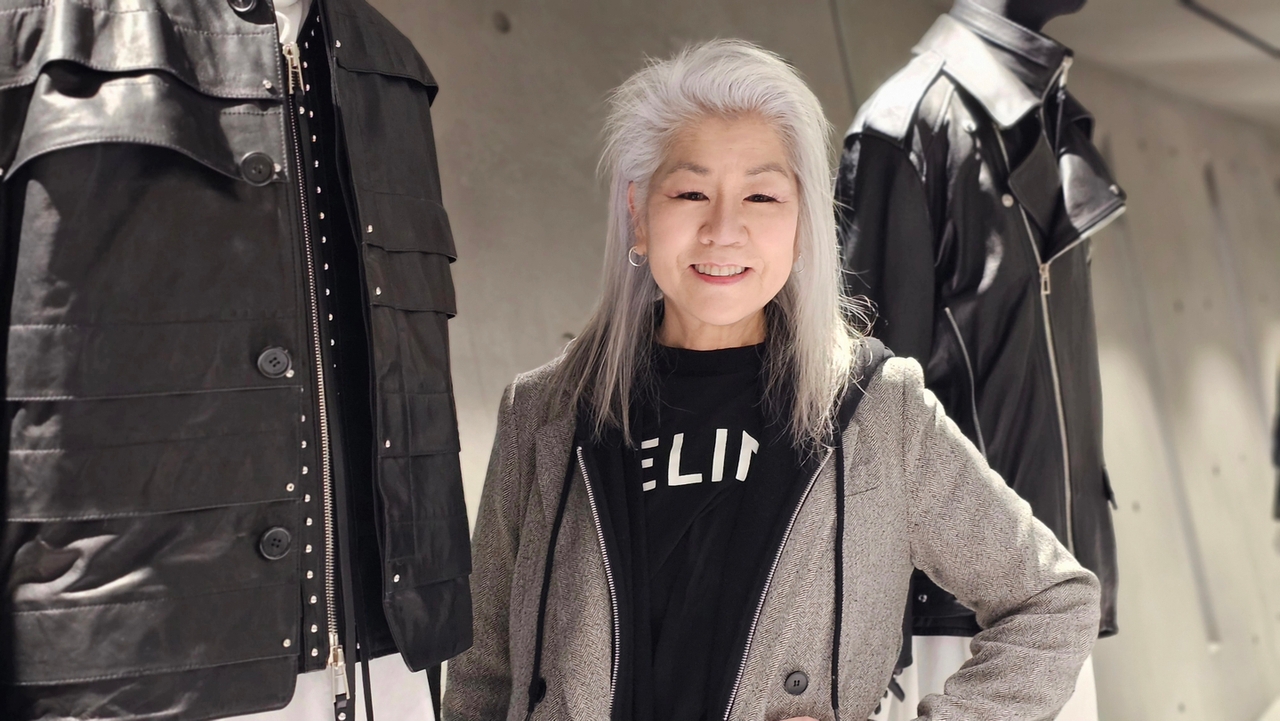
For Kat Turner, a Korean American adoptee born in Busan, discovering BTS was not simply a matter of finding a band. It was, she says, a way of rediscovering herself.
Now in her 60s — chic with silver hair and a black Celine shirt — Turner has been a devoted member of the group’s global fandom, known as ARMY, since 2020. Her connection runs deeper than mere admiration, however, as it marked a turning point in a lifelong negotiation with identity.
“It took until 2020 and people like BTS for me to see, ‘Well, being Korean is a good thing’,” she said, her voice catching.
“I didn't know what ‘Arirang’ meant until BTS named their album this,” she added, pointing to the septet’s latest full-length release, “Arirang,” named after a collection of beloved Korean folk songs.
“So many people are learning more about Korea and Korean culture — but specifically for me, my journey, that [‘Arirang’] was my song without knowing.”
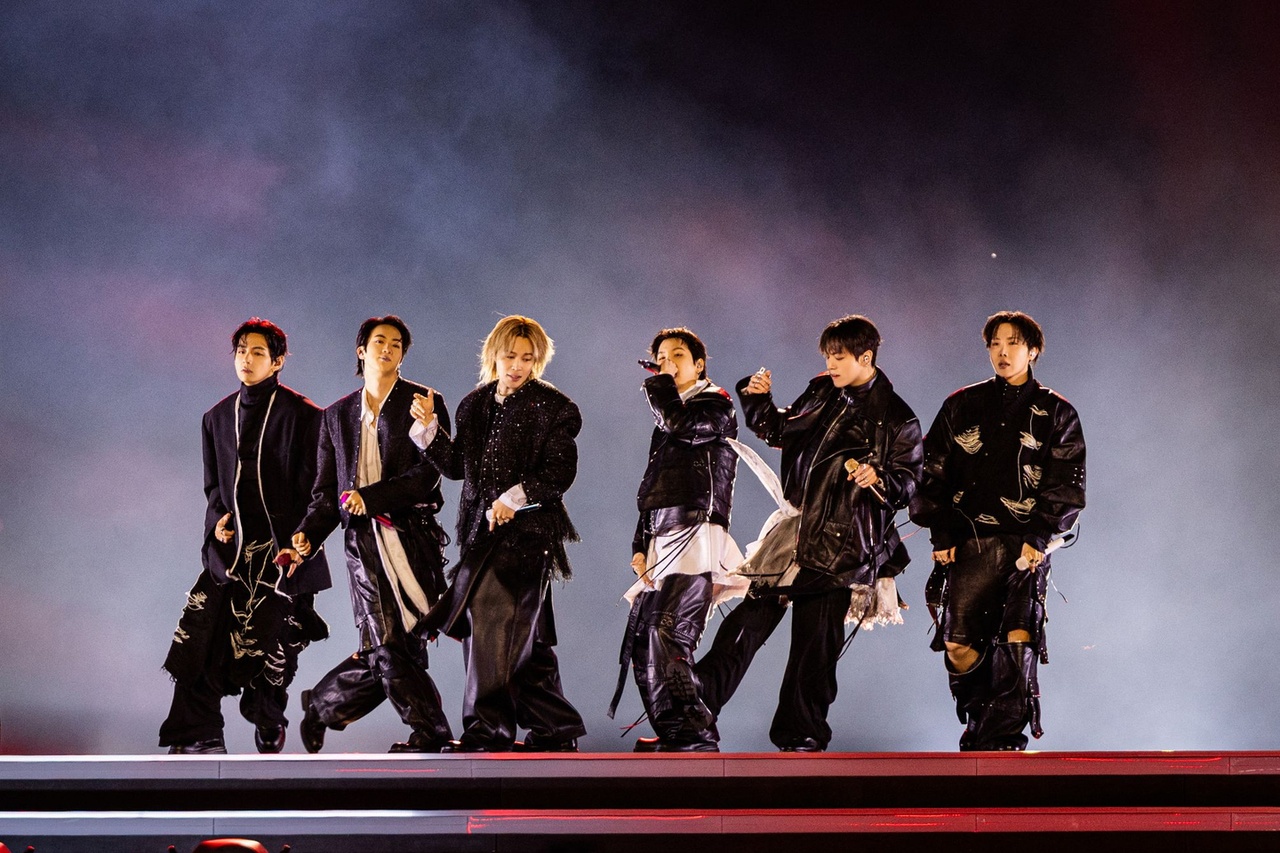
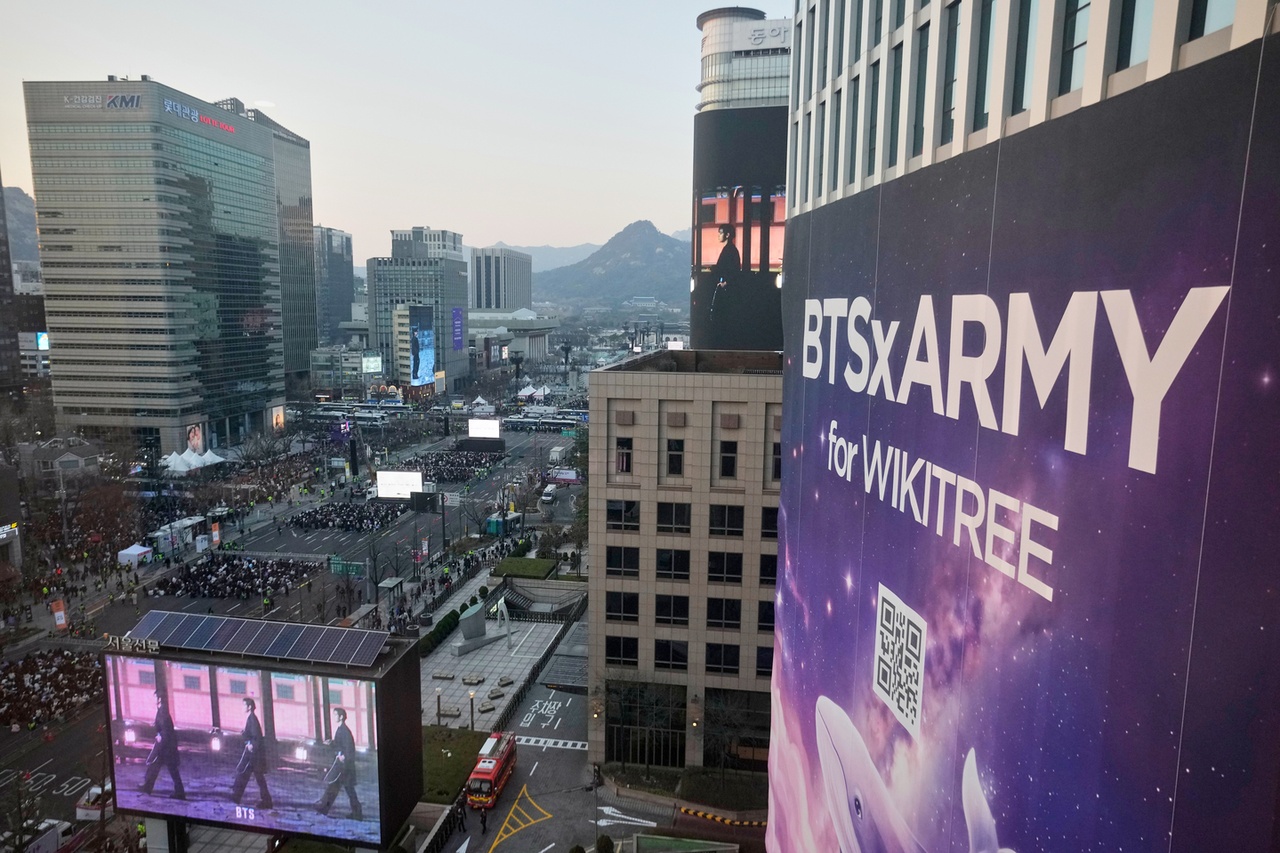
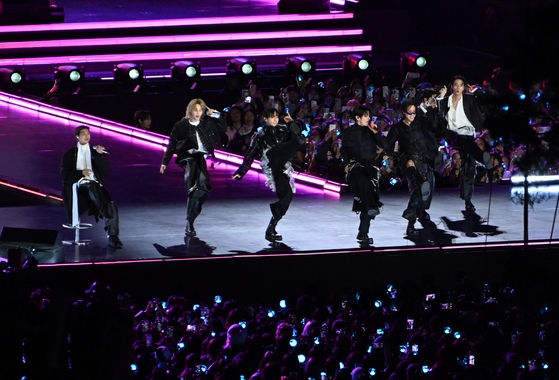
Turner spoke beside mannequins dressed in the group’s stage costumes for its March 21 comeback performance at Seoul’s Gwanghwamun Square, now displayed on the second floor of Gallery Noir Songzio. There, Turner grew visibly emotional as she recalled her childhood in the United States, where, she said, being Korean often made her a target for ridicule.
“Growing up in the U.S., you’re just being made fun over being Korean,” she shared. “And finally, you see examples of, 'Oh my gosh, we can be proud to be Korean.'”
Such realization has since set something in motion.
“So, my journey to learn about Korea and where I was born started in 2020.”
ARMY goes silver-purple
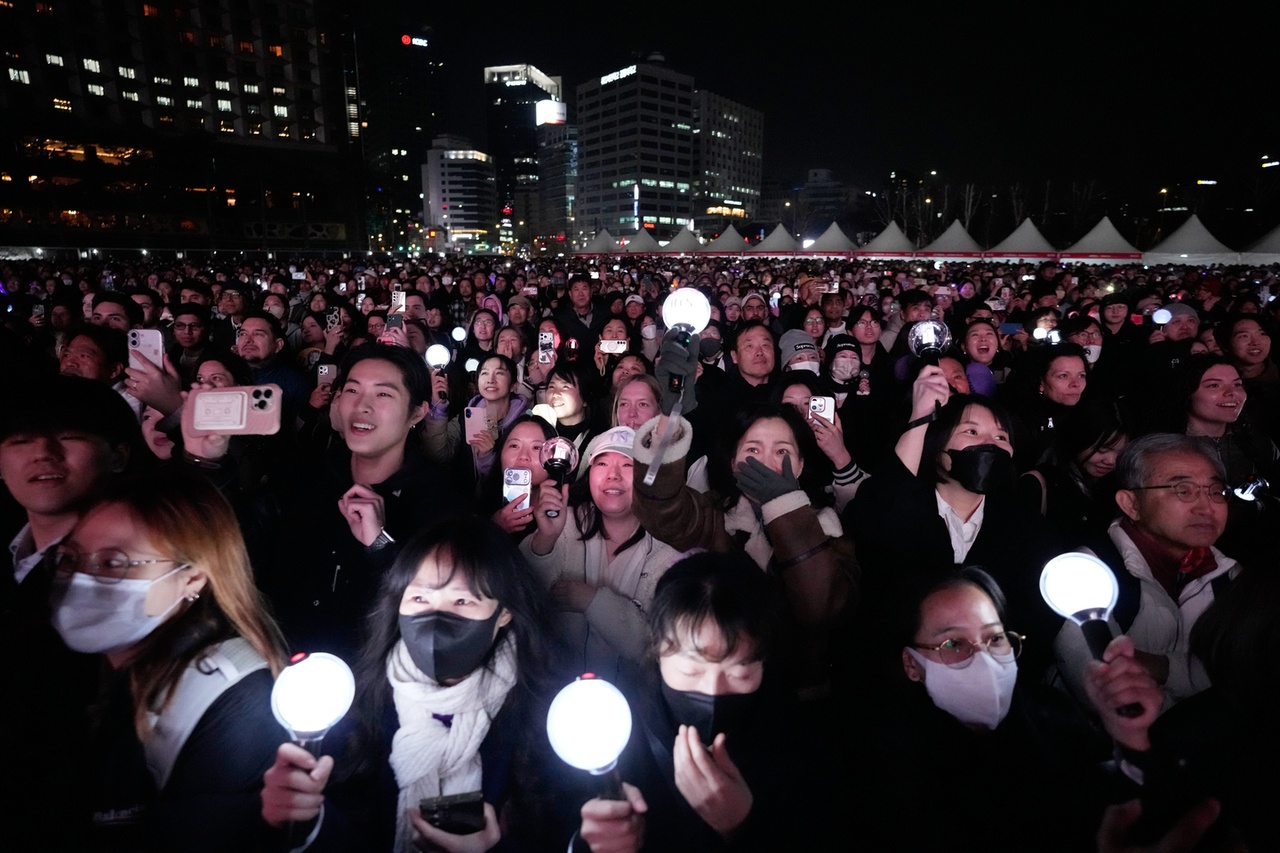
Turner is part of a significant contingent within BTS’s global fandom that skews older, with some calling themselves “Silver ARMY.”
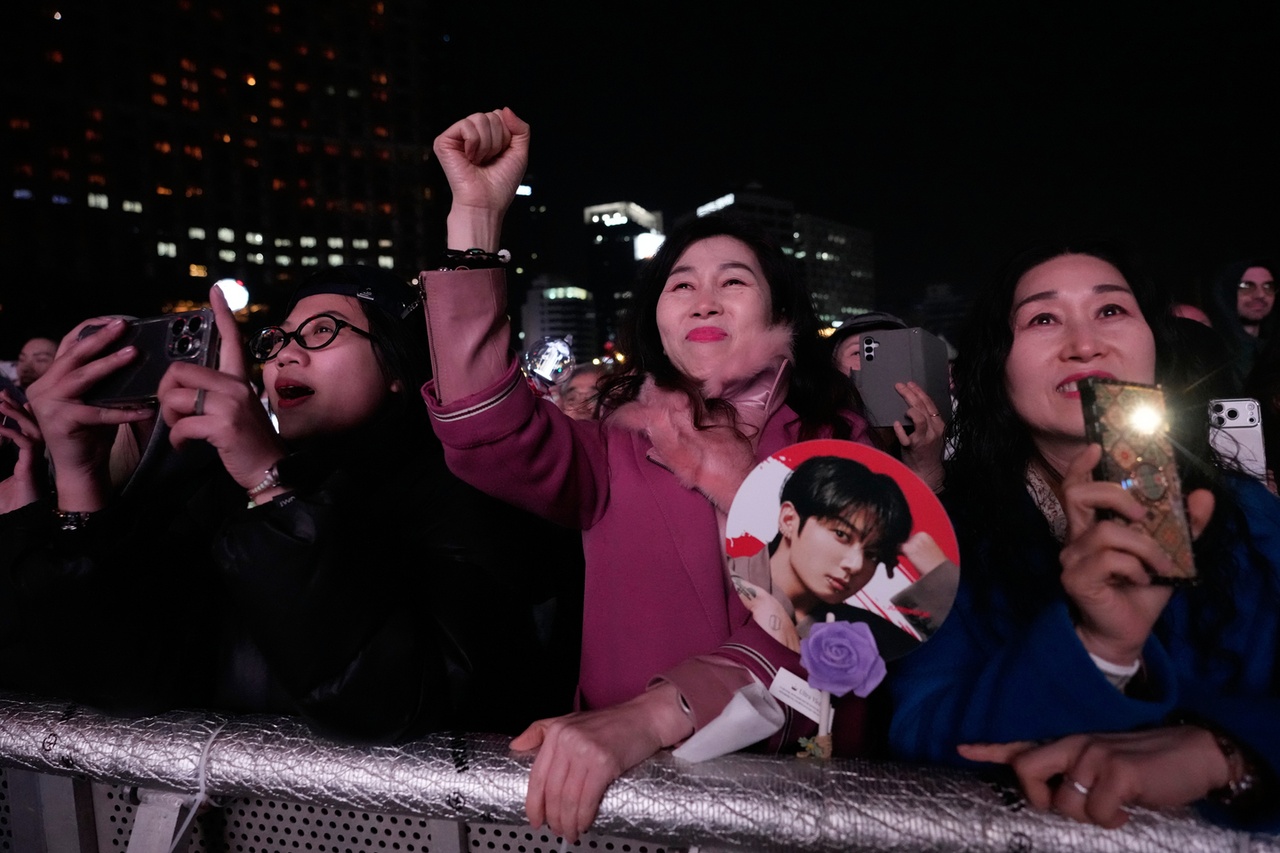
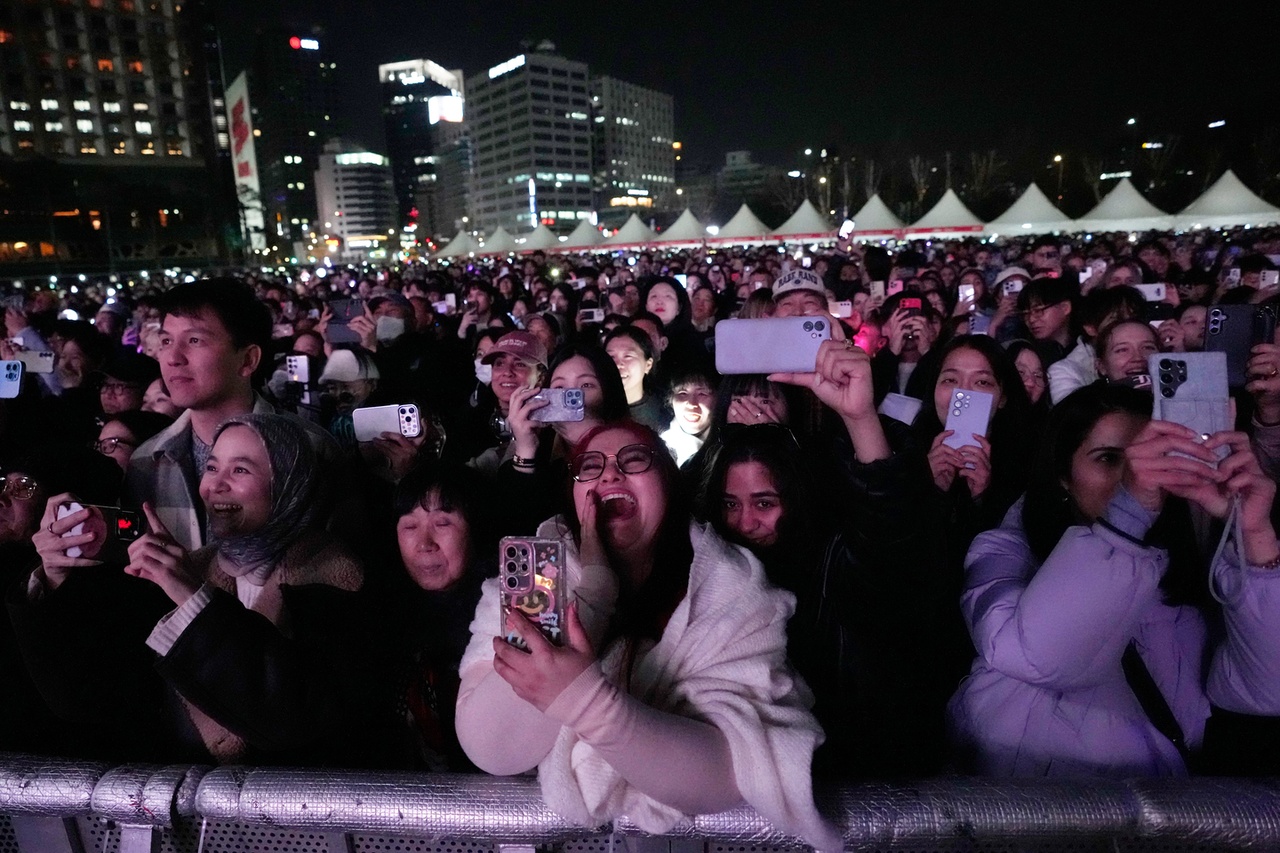
While the fandom remains famously diverse across ethnicity, age and identity, the visibility of older fans has become increasingly difficult to miss. That shift was evident at the group’s March 21 comeback event at Gwanghwamun Square, where the crowd extended well beyond the young women who have traditionally dominated K-pop audiences.
Interspersed among them were fans in their 40s, 50s and older — mostly women, but also men — forming a multigenerational audience that was once considered atypical for a K-pop act.
Data backs the trend.
According to data tech company IGAWorks, of the 163,964 individuals who passed through the vicinity of Gwanghwamun Square on the day of “BTS the Comeback Live: Arirang,” women in their 40s made up the largest share at 21.8 percent, followed by men in their 40s at 13.3 percent. Women in their 50s made up 12.2 percent, and women in their 30s 12.1 percent.
Compared with other K-pop acts — whose audiences still skew younger — BTS stands out for its unusually broad age range.
Among tickets purchased for boy band Seventeen’s April concert, fans in their 20s made up the largest share at 34.6 percent, followed by those in their 30s at 33.7 percent, according to data from NOL Interpark as of Thursday. Fans aged 50 and over accounted for just 1.9 percent.
By contrast, audiences for BTS’s upcoming “Arirang” concert in Goyang, Gyeonggi, are far more evenly distributed across age groups. Those in their 40s make up 26.8 percent, those in their 20s 26.4 percent and in their 30s 25.9 percent. Notably, fans aged 50 and above account for 12.9 percent, while those under 20 represent 5.9 percent.

BTS represents culture
What, then, has driven BTS’s fandom to extend well beyond the conventional bounds of K-pop?
At its core, fans point to the emotional depth of the group’s music and narrative centered on the message of “Love yourself.” But BTS’s unique position in the global pop landscape has also played a decisive role.
For the Korean diaspora, the group has contributed to redefining representation on a global stage, reshaping what Korean identity looks like in popular culture.
In Korea, the emotional register is different — but no less intense.
Cho, a 55-year-old office worker in Seoul who wished to be identified by her surname, first took interest in 2018 after a colleague in her 40s spoke about her fascination with BTS member Jin.
“Since then, I became curious about what makes the group so popular worldwide,” Cho said.
She began watching reaction videos on YouTube, where creators analyze and praise the group’s music and performances, and soon found herself revisiting the group’s discography and content from its earliest releases.
“I found moments of healing and relief from daily life through BTS and fan content, where ARMY around the world share how the group helped them through struggles and depression,” she said. “That’s how it became a routine for me to be part of that community, loving and supporting BTS.”
The group’s unique relationship with mass media has been key to broadening its audience, said Kim Jung-won, an ethnomusicologist specializing in K-pop culture at Yonsei University.
“BTS has been portrayed across the broader media scape — through mainstream outlets like news channels as well as social media — primarily with its achievements in the United States, rather than targeting a specific demographic in terms of its exposure,” said Kim.
That visibility, she added, tapped into a sense of national pride, positioning the group as a cultural emblem of Korean identity and ultimately drawing audiences beyond traditional K-pop listeners.
The widening age range of the fandom also reflects broader social shifts.
“Those in their 50s and 60s today are different from previous generations,” Kim stressed, noting that Korea’s Generation X grew up expressing identity through pop culture and consumption in the 80s and 90s. “The subculture they consumed in their youth has grown with them — and is now part of the mainstream.”
Community thrives on diversity
While the presence of fans in their 50s and older may feel relatively new in Korea’s pop landscape, in the West, where youth culture has been embedded since the 1950s, it is less unusual.
“Many Silver ARMY I've spoken to have been avid fans of other artists, and so we share those stories with each other,” said Sam, a 50-year-old fan based in Bournemouth, England, who has been part of ARMY since 2024.
As a member of Generation X in the United Kingdom, Sam said they and their peers have faced little difficulty navigating the fandom culture and digital platforms that sustain modern fandoms.
What drew them, according to Sam, was the craft.
“I'm a fan of BTS first and foremost for their level of artistry, both as singers, dancers, songwriters and producers,” they noted. “What has kept me interested in them is their humanity, their philanthropy and the messages they promote through their work.”
That sentiment echoes across fans as Turner cited the group’s “authenticity” for BTS’s cross-generational appeal, while Cho pointed to its “warm message of ‘love yourself’ and musical versatility.”
For many, that shared admiration has fostered a sense of community, one that cuts across age, ethnicity and sexuality.
Sam recalled first connecting with another fan, Tia, a Korean woman they met during an online English lesson.
“At the time, I was a little embarrassed, thinking I was too old for something like this, but Tia was close in age to myself,” Sam recalled.
Tia, who passed away in February last year unexpectedly from cardiac arrest, remains a lasting presence in Sam’s memory, who hopes to one day connect with someone else who remembers her.
“BTS has shifted my outlook on life,” said Sam, pointing to “love yourself” as the core message behind BTS’s artistry.
“Building something worthwhile takes time and commitment,” they said. “That's something else that I've learned from them — It's changed the way I approach my life a lot.”
Ageism under pressure
While the ARMY community offers a sense of belonging, the broader social landscape is notably less inclusive.
Turner shared that she refrains from disclosing her age online because of the longstanding prejudice.
“There's so much discrimination going on,” she said. “Once people find out your age, they have certain expectations.”
Such attitudes persist within K-pop fan culture, said Kim.Older fans have at times been mocked online when their names appear on fan-meeting winner lists, she noted, reflecting wider age-based prejudice in Korean society.
“There has long been a fixed idea of how older generation should behave in Korea,” Kim said, suggesting that such biases may continue to create friction in the future as fandom demographics diversify.
“But K-pop is beginning to challenge that,” Kim said. “As expectations broaden, I believe the shift is very inspiring and significant in the societal context.”
Now, as BTS prepares to perform in Busan — the city of Turner’s birth — she is among those crossing their fingers, hoping to secure a ticket despite the notoriously fierce competition.
“The Busan concert would be very meaningful to me — that's where I was born,” she said with a smile. “I also want to know what it feels like to be in an audience where I blend in.”
BY SHIN HA-NEE [shin.hanee@joongang.co.kr]