'No Other Choice' pioneers new approach to breaking even in Korea's struggling film industry

Cinema may be celebrated as culture, but it only survives as an industry.
From the moment the Lumière brothers charged audiences for the first film screening at the Le Salon Indien du Grand Café in Paris 1895, cinema has lived by a simple rule — a film that cannot make money cannot survive. Culture without profit cannot sustain itself as an industry.

That basic principle has become precariously real for the Korean film market in the 2020s. Production costs have soared, but theaters have been slow to recover since the Covid-19 pandemic. The break-even point once considered attainable — about 3 million domestic viewers — is now a near-impossible goal. As box-office flops mount, investment has dried up, locking the industry into a vicious cycle of financial caution.
Faced with this structural crisis, Korean filmmakers have begun experimenting with new models. Some, like BY4M Studio, have leaned into hyper-optimized viral marketing, while others, such as director Yeon Sang-ho in the case of his mystery thriller “The Ugly,” have pushed ultra-low-budget filmmaking.
Then came the industry-shaking news that director Park Chan-wook’s new film, “No Other Choice,” recouped its entire production budget — some 17 billion won ($11.9 million) — even before release, purely through overseas presales.
The feat stirred envy across the industry. Like Hollywood blockbusters that rely on global box offices to hedge their production risks, Park’s film proved that a Korean production could now secure its full financing in advance through international sales alone. For investors and producers, the simple relief of not having to watch domestic ticket numbers with pounding hearts is a luxury in itself.
Of course, it’s a feat only Park could pull off. But every new path starts with one person cutting through the woods — and his success sets a valuable precedent.


The pattern began with “The Handmaiden” (2016). That film was presold to 176 countries, a record for a Korean movie at the time, including a direct distribution deal with Amazon MGM Studios for North America. The sales not only broke records in volume and total value, but also proved that the intellectual property of Park Chan-wook alone could offset millions of dollars in production risk.
The deal for “The Handmaiden” was finalized between the Cannes Film Festival's invitation announcement in April and the film’s June release that year — a window in which the cachet of “a Cannes competition title” directly boosted both the price and speed of sales. Later honors, including the British Academy Film Award for Best Film Not in the English Language, confirmed the wisdom of those early investors.
His next film, “Decision to Leave” (2022), faced tougher odds at home. Despite a production cost of 13.5 billion won, it opened in the shadow of “Top Gun: Maverick” (2022) and “Thor: Love and Thunder” (2022). Many viewers found its slow-burn pace and intricate romantic thriller structure challenging as well.
Even with Park’s Best Director Award at Cannes, the timing left little room to leverage that prestige for presales. Still, “Decision to Leave” surpassed “The Handmaiden” in reach. Thanks to overseas presales in 193 countries, the film was able to reach its break-even point with just 1.2 million domestic viewers — far below the usual 3 million required for profitability.
Notably, the film’s overseas rights went to MUBI, a global art house streaming platform that paid a premium for Park’s artistic reputation. The deal added not just financial stability but qualitative value to the film’s global profile.

That track record reassured investors: even if Park’s films fluctuate at the local box office, their international revenue all but eliminates financial risk.
With “No Other Choice,” Park has taken that model to its logical extreme. The film recovered its entire 17 billion won budget before release through overseas presales to over 200 countries, effectively divorcing its financial fate from domestic reception.
Two key factors drove that success. The first decisive factor was timing. “No Other Choice” secured an invitation to the Venice International Film Festival’s main competition precisely when overseas presales were at their most active.
While “Decision to Leave” accelerated its sales only after winning an award, “No Other Choice” sparked a wave of competitive early investment among global buyers simply with the news of its selection. That timing alone gave distributors strong grounds to pay top prices.
The second decisive factor was the film’s casting. Where Park’s previous works relied primarily on his own auteur reputation, his latest added a globally bankable star with undeniable commercial power.
An actor like Lee Byung-hun, already familiar to international audiences through Hollywood films and Netflix’s global hit “Squid Game” (2021-), represented a rare “guaranteed draw” across both theatrical and streaming platforms.
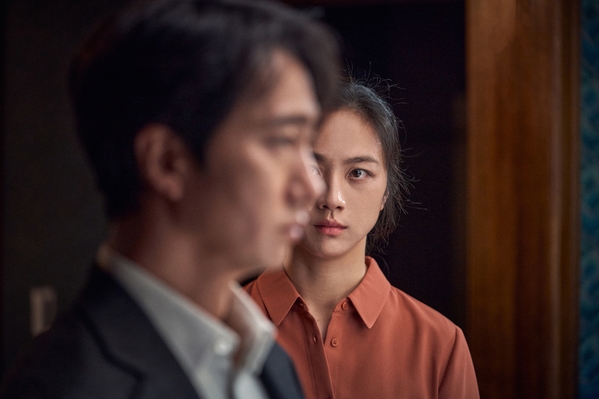
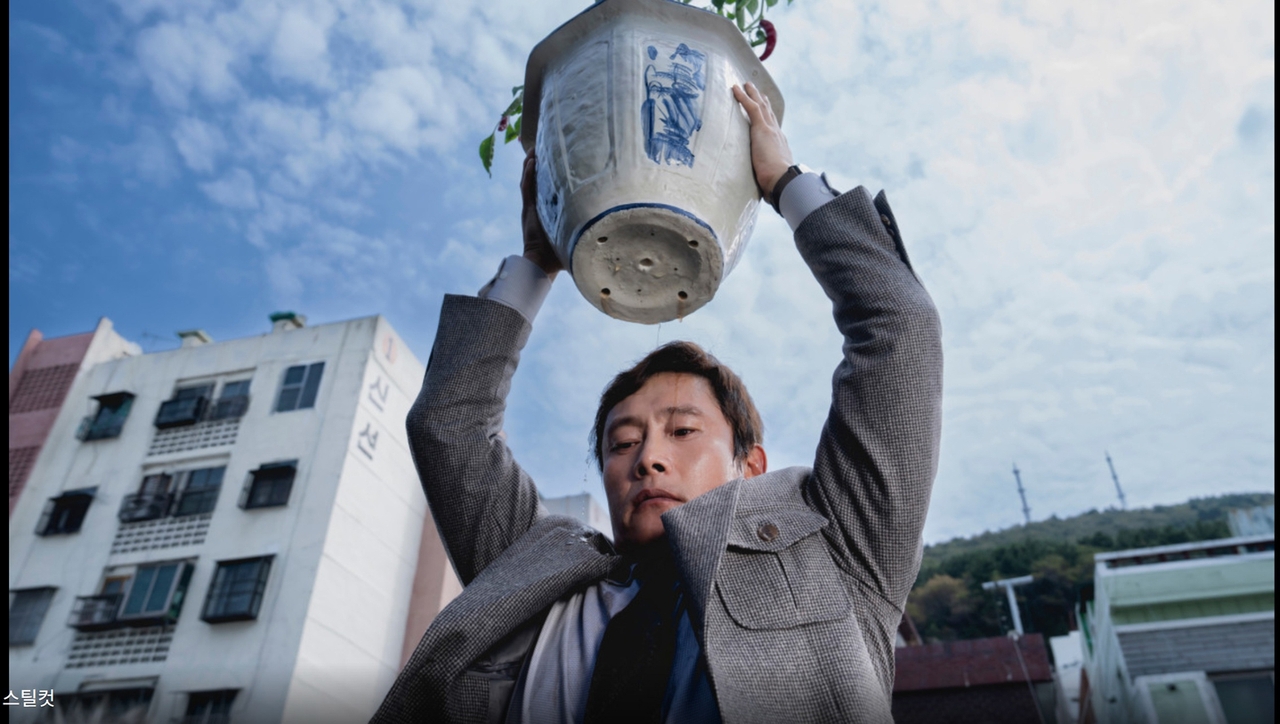
When Park’s artistic prestige met the actor’s worldwide popularity, buyers saw the film as an almost risk-free premium investment. The result was a financial home run achieved before a single domestic screening.
Even when the film’s local box-office performance turned out to be underwhelming and audience ratings polarized, it no longer mattered. The math was already in the black.
It’s a new model — perhaps the only safe and sustainable one for Korean cinema today. By securing full production costs through international presales, filmmakers can neutralize the volatility of the domestic market. Producers gain creative autonomy without the pressure of break-even anxieties, and distributors can focus on long-term artistic value instead of opening-week numbers.

It’s not a formula just anyone can replicate; it requires a track record like Park’s and star power like Lee’s. Yet, it’s also a Netflix-era blueprint — one that merges the prestige of global festivals with the reach of global platforms.
In an era where Netflix has become a constant in the film ecosystem, Park’s model offers a path worth emulating. It is, of course, the result of steady evolution — a progression that began with “The Handmaiden.” There are many ways to keep Korea’s film and theater industries alive in a shrinking domestic market, and producing low-budget films may be one. But none is more effective than securing revenue from the global market — where success can sustain both artistic ambition and financial survival.
This article was originally written in Korean and translated by a bilingual reporter with the help of generative AI tools. It was then edited by a native English-speaking editor. All AI-assisted translations are reviewed and refined by our newsroom.
BY CHO YOUNG-SHIN [shin.minhee@joongang.co.kr]