Theaters turn into fan venues, merch shops as filmmakers tackle dwindling box office sales
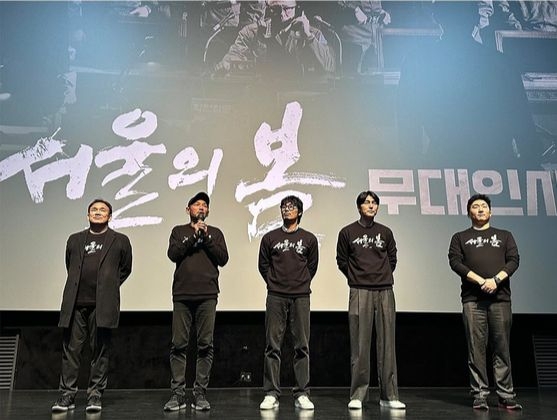
232 times.
That’s how many stage greetings the historical film “12.12: The Day” (2023) held during its theatrical run, within nine weeks since its release on Nov. 22, 2023, until Jan. 15, 2024.
In the past, these in-person appearances were usually limited to opening weekend or, at most, extended into the second week, but now it is easy to see cast members showing up at theaters for a month — or sometimes even longer — after the release, a level of fan engagement that was once unthinkable.
Why? Because filmmakers — including production companies, distributors, actors and directors — are eager to retain theatergoers, who have become increasingly scarce in recent years.
In the past — or say before Covid-19 — Korean films’ promotion mostly relied on traditional channels, such as posters, flyers, press conferences, TV appearances and, of course, good old-fashioned word-of-mouth.
While these methods are still in use, the focus has shifted heavily to social media, direct interaction and audience engagement, as clearly demonstrated by the remarkable number of stage greetings for “12.12: The Day.”
A dramatic decline in the number of theatergoers has led to a significant shift in marketing tactics, as production houses increasingly focus on a small group of people likely to attend the theater, rather than targeting the general public.
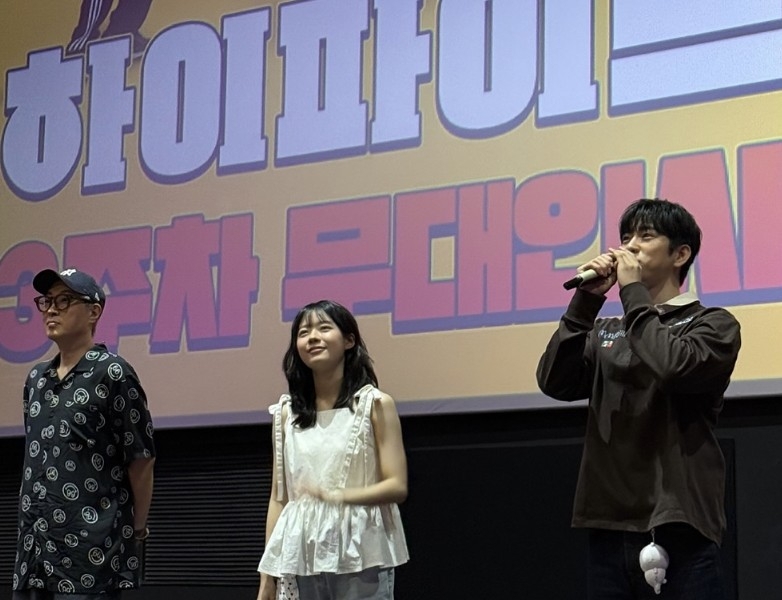
The historical film is not the only example. The latest comedy action film “Hi-Five,” starring Yoo Ah-in, held 138 stage greetings for four consecutive weeks following its May premiere. And upcoming film “My Daughter is a Zombie,” set to be released on July 30, already has a three-week stage greeting schedule locked in — even before its premiere.
Connecting with the audience
Audience engagement has now become a key focus for many film marketers, especially during an era where it is no secret — even to the general public — that the Korean film industry is facing challenging times.
This year, the situation worsened as only three films managed to barely surpass the 3 million ticket admission mark, with the highest being “Yadang: The Snitch” at 3.3 million ticket admissions, as of June — a stark contrast from last year, with two films — “Exhuma” (2024) and “The Roundup: Punishment” (2024) — surpassing the 10 million ticket admission milestone and eight films, in total, the 3 million mark.
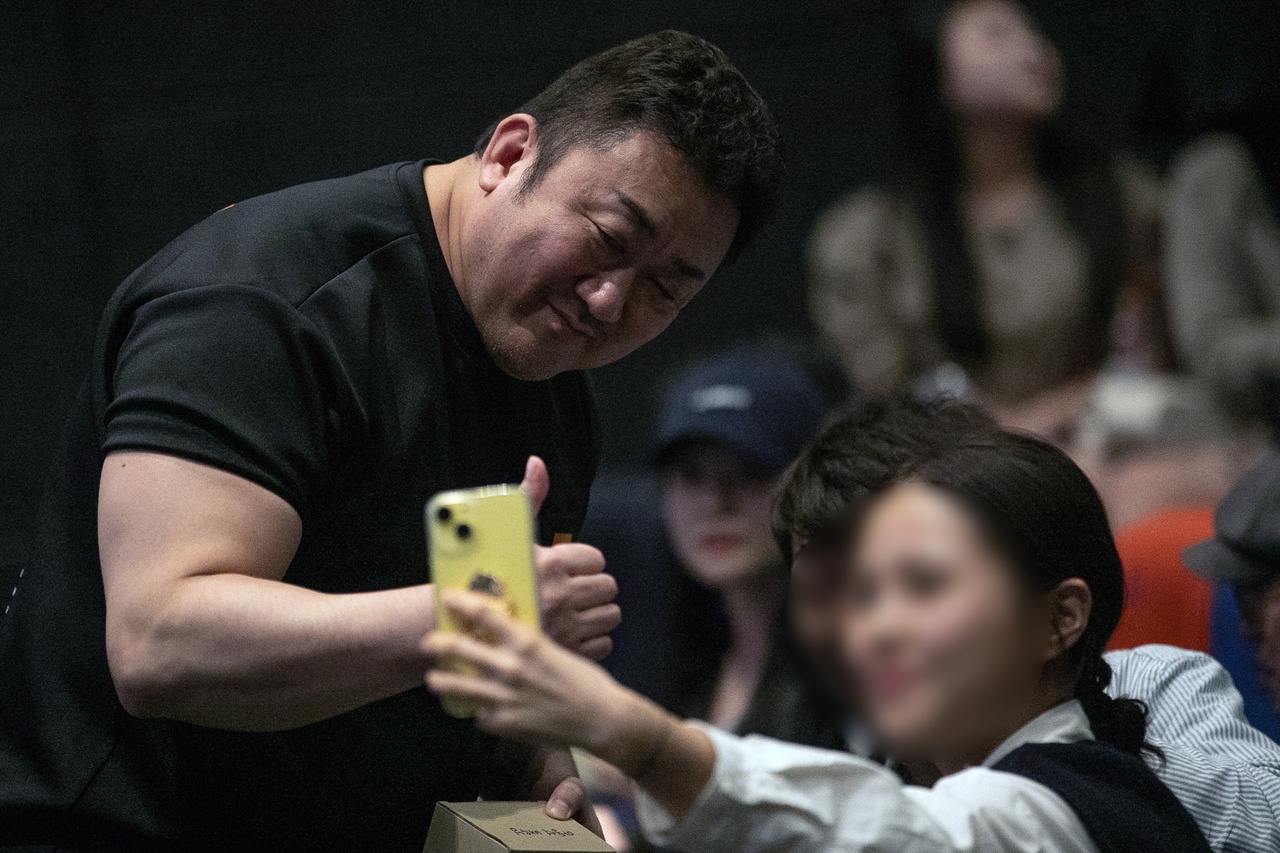
Amid these discouraging figures, film marketers are pulling out all the stops to bring audiences back to theaters. One of the most crucial strategies in film marketing now is creating opportunities for direct interaction — offering fans chances to meet actors in person or participate in guest visits (GV), where they can share their thoughts with the cast, crew or other insiders.
“Compared to the past, I think we’re trying a lot more now to connect with audiences offline, by breaking down the barriers between online and offline experiences,” Lee Soo-jung of Lotte Culture Works’ communication team, operator of one of Korea’s largest film distributors, Lotte Entertainment.
These interactions, especially stage greetings, appear to have a measurable impact. “Even those who aren’t necessarily individual fans of the actor often opt for screenings that include stage greetings, especially when there’s positive word-of-mouth about the actor’s fan service,” a theater representative noted in local news outlet Hankyung.
The growing reliance on stage greetings also reflects a broader strategic shift: instead of chasing broad mass appeal, marketers are zeroing in on small but loyal fan bases, often leading to repeat viewings from devoted supporters.
According to PR Agency Scon, which managed promotions for the Berlinale-invited film “The Old Woman with the Knife,” a striking difference in attendance was noted depending on whether a stage greeting was scheduled. Actor Kim Sung-cheol, who starred in the film and is known for his loyal fan base across cinema and musical theater, proved to be a major draw. Screenings featuring his in-person appearances were frequently sold out.
The same seems to apply to the upcoming fantasy action film "Omniscient Reader," starring actors Ahn Hyo-seop and Lee Min-ho, as the tickets for its stage greeting are already sold out, despite weeks remaining until its premiere on July 23.
Stage greetings also provide numerous moments that fans can capture and share online, generating viral content that can positively impact a film’s performance.
When such content goes viral, it boosts the visibility not only for the film but also for the actors involved. To amplify their reach, film marketers often collaborate with viral marketing agencies — though sometimes, the most significant moments happen organically from fan-made content, which is beyond the marketer’s control.
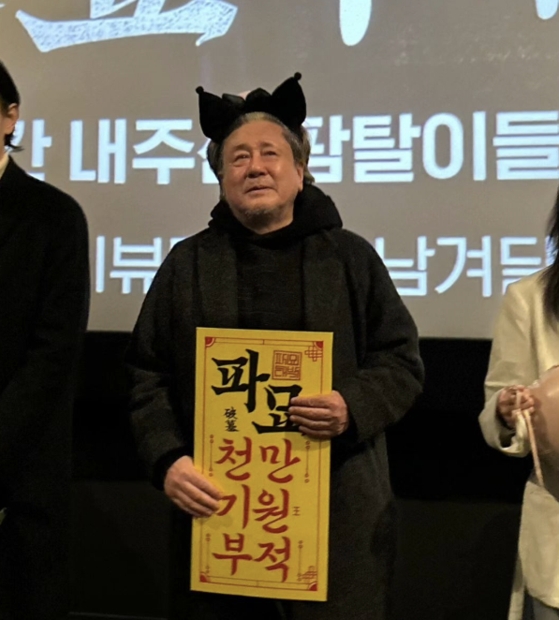
For example, actor Choi Min-sik — typically known for portraying serious and heavy characters — drew buzz for wearing cute accessories gifted by fans during stage greetings for the film "Exhuma," including a beloved giant panda Fubao-inspired headband, Hello Kitty ears and even a fan-made snack box bag.
Goods and merchandise
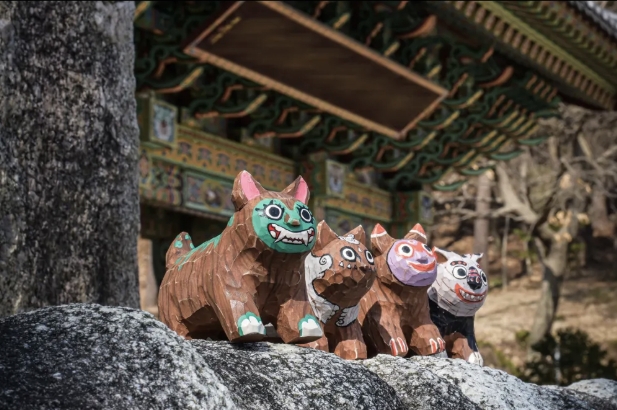
As social media continues to play a bigger role, people tend to seek theater experiences that are both memorable and “postable,” according to industry insiders.
“Nowadays, people want something with which to remember the moment or something to post on social media,” said a spokesperson for Showbox, a major film distributor in Korea.
Following the trend, making “postable” memories has now become a consideration among film promoters. As a result, many theaters and distributors offer exclusive merchandise, open pop-up stores and launch social media-driven fan campaigns.
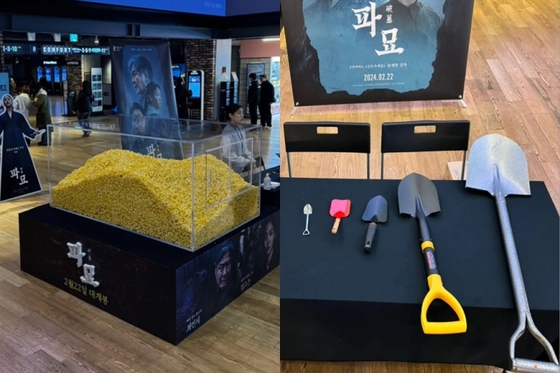
One example was carried out during the theatrical run of the occult film “Exhuma.” Multiplex theater chain Megabox hosted a one-day pop-up event inspired by the film’s central theme of grave-digging at its COEX branch. Titled “Pop-myo,” the theater stacked up popcorn in a container resembling a grave mound and provided shovels of various sizes that moviegoers could scoop up as much as they wanted.
More recently, the film “Big Deal” held a social media event for fans who watched the movie multiple times. Fans would upload proof of their multiple viewings, along with a commentary explaining why they love the film on social media. The winner would receive T-shirts autographed by the film’s cast, Yoo Hae-jin and Lee Je-hoon.
Film marketing insiders also commonly point out that the current moviegoing demographic is becoming increasingly “niche” and “fandom-driven.” These fanbases, however, tend to be highly engaged and willing to spend, particularly on film-related merchandise.
For instance, the animated occult film “Exorcism Chronicles: The Beginning” drew significant attention in March, with its official merchandise crowdfunding campaign on Tumblbug surpassing 500 million won ($366,000) within just two days of its launch, far exceeding its original goal of 3 million won.
Do they really work?
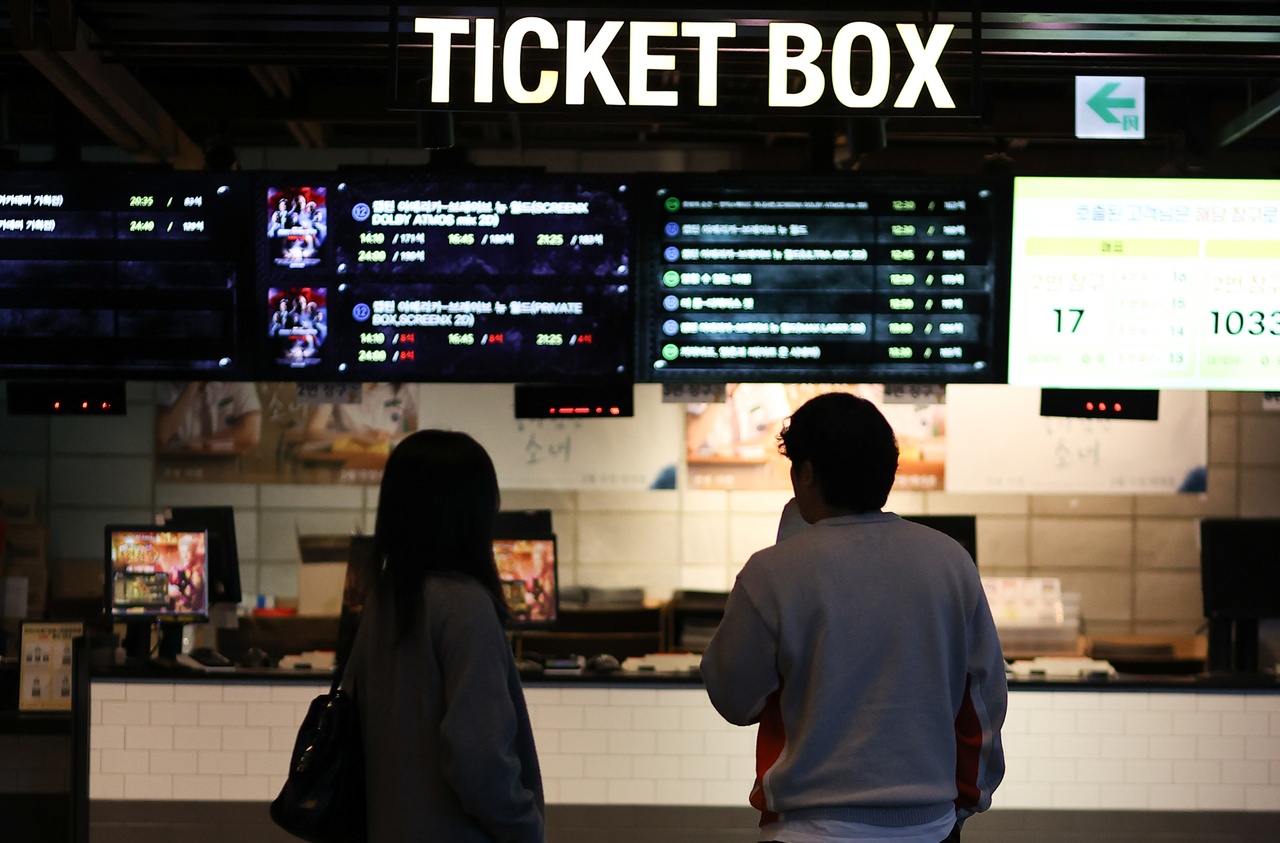
Industry insiders note such shifted tactics help build early buzz, especially around the tipping point of several hundred thousand admissions — a threshold often considered when word-of-mouth starts to kick in and drive broader audience interest.
They also say that even mixed or negative responses are better than none at all. “Nowadays, we’re seeing more and more cases where films don’t even get bad word-of-mouth — they just get no reaction at all, and that’s actually becoming a bigger concern for us,” the head executive Lee Ju-yeon of PR company Scon said.
And for goods and merchandise, only a select number of films get to try out such campaigns.
Marketers explain that animated features, which are based on fictional characters and typically come with clear copyright ownership, lend themselves more easily to merchandising. Live-action films, by contrast, involve more legal and financial complexities, especially when actors’ likenesses are involved.
As the film industry continues to evolve, marketers say they are still trying to determine the most effective approach to attract today’s increasingly discerning audiences. The challenge lies in finding the right balance — one that not only gets attention but also brings people back to theaters.
“We still see the theater as the main offline space, of course, but we’re also trying out a variety of outreach-style events — things that allow us to go to the audience. We’ve really been exploring a lot of different approaches lately,” Lee Soo-jung said.
BY KIM JI-YE [kim.jiye@joongang.co.kr]