Slumping year, shifting landscape: What 2025 revealed about Korea's box office
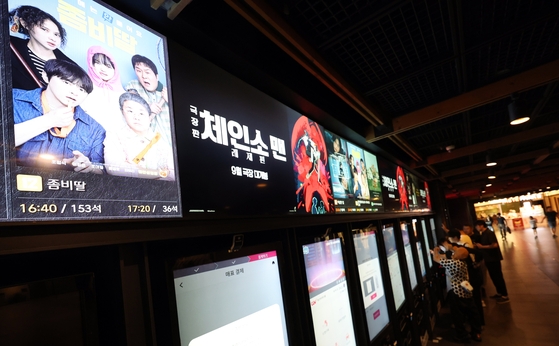
Korea’s box office in 2025 presented a sobering snapshot of an industry still struggling to regain momentum in the post-pandemic era. Not a single film reached the 10 million audience mark, and only one Korean film even made it to the top five most-viewed list.
Yet beneath this bleak surface lie signs of shifting audience preferences and a changing perception of what the theatrical space itself represents, offering clues as to where the industry may be headed next.
The total number of moviegoers this year stood slightly over 103 million as of Friday, a precipitous drop from the more than 123 million recorded the previous year.
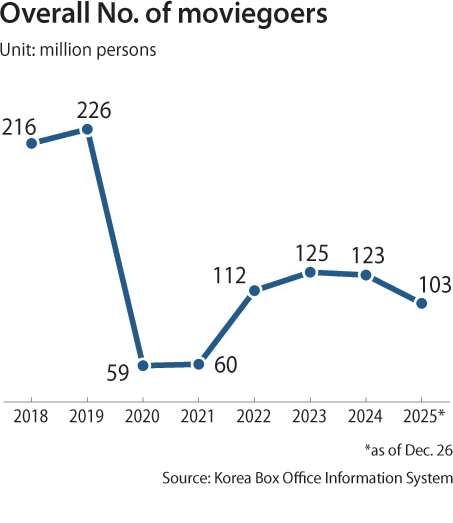
The downturn was further highlighted by the absence of any film this year surpassing the 10 million admissions milestone — widely regarded as a benchmark for major commercial success in Korea. The last time that Korea had no films that reached this level was during the pandemic four years ago. Then, the lack of moviegoers could be attributed to the extraordinary circumstances of 2021; however, the same explanation doesn't apply today, making the current situation even more concerning. It also perhaps demonstrates that audiences now go to the theater for a specific purpose.
“[This year’s box office showed that] films that give audiences a real reason to go to the theater can survive,” pop culture critic Jung Duk-hyun said.
Though the numbers point to a film industry in a pronounced slump with the overall box office performance being disappointing, the year also revealed a notable shift. So how did this year's box office look, and how should the nation's box offices approach the upcoming year?
Korean films lose their footing
At this year’s box office, four of the top five titles were foreign or animated films, with only one Korean production making the list.
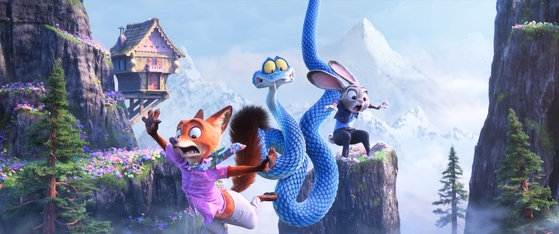
Currently at No. 1 is Disney's “Zootopia 2,” followed by Japanese anime “Demon Slayer: Kimetsu no Yaiba – Infinity Castle Arc.” The sole Korean film, “My Daughter is a Zombie,” ranked third, while the Brad Pitt-led “F1” and Japanese anime “Chainsaw Man: The Movie – Reze Arc” placed fourth and fifth, respectively.
This is in stark contrast to last year, when only one foreign title — “Inside Out 2” (2024) — entered the top five, outnumbered by Korean films such as “Exhuma” (2024), “The Roundup: Punishment” (2024), “I, the Executioner” (2024) and “Pilot” (2024).
While the strong performance of foreign films and Japanese anime may appear to reflect their popularity, many experts point to a more fundamental reason: the limited number of Korean films released in theaters this year.
“The biggest problem was that not many Korean films were actually made,” pop culture critic Jung said. “With so few domestic titles, it’s hard to expect strong results, which leaves theaters in a position where they have little choice but to depend on foreign films or animation just to survive.”
Some noted that foreign and animated films did not necessarily outperform expectations, but rather stood out because of the absence of domestic titles.
“Foreign films and animation basically sold about as well as they always have,” culture critic Kim Sung-soo said. “In the case of animation, there were more releases [this year], but that wasn’t really because demand suddenly grew. It was more that theaters didn’t have much else they could put on screens, so they ended up showing more animated films.”
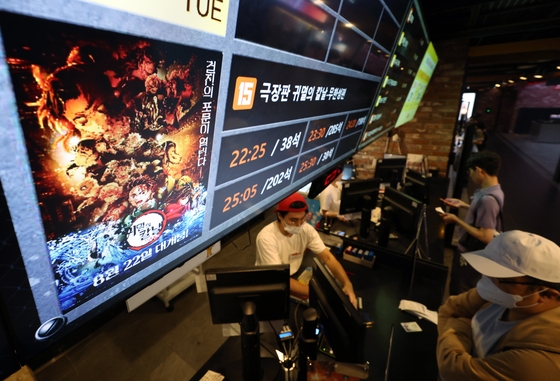
He added, “When you go to a theater and that’s pretty much all there is to watch, you just watch that. There are still people who go to the movies out of habit, and for them, choosing animation or a foreign film is almost unavoidable when the options are so limited.”
The shortage of Korean theatrical releases is also closely linked to the migration of filmmakers to global streaming platforms such as Netflix and Disney+, further weakening the theatrical ecosystem.
“A lot of people in the film industry who moved over to streaming platforms still haven’t come back,” film critic Youn Sung-eun said.
“For example, director Byun Sung-hyun, who made Netflix’s ‘Good News,’ is someone who originally made theatrical films, but he moved to streaming platforms and received strong responses there. If ‘Good News’ had been released exclusively in theaters, it probably wouldn’t have drawn that many viewers, but through the streamer, it was able to achieve a meaningful result.”
She added, “That’s why it’s not so easy for directors to come back to theatrical films because streaming platforms offer a space with less risk, more freedom in subject matter and more room to try things they actually want to make. In that sense, streaming has become a much more comfortable option for creators.”
Not much that is truly new
Seeing something totally new was difficult this year, as many releases were built on already popular intellectual property (IP), ranging from anime and major franchises to spinoffs and remakes. In other words, box offices favored stories with proven storylines that could reliably lure people to the theaters.
Japanese anime series like “Demon Slayer: Kimetsu no Yaiba - Infinity Castle Arc,” “Chainsaw Man: The Movie - Reze Arc” and “Juhutsu Kaisen: Shibuya Incident / Culling Game - The Movie” have gained momentum in cinema. Overseas franchise films, including “Mission: Impossible – The Final Reckoning,” “Zootopia 2” and “Avatar: Fire and Ash,” also dominated screens.
And for Korean films, many showed a similar pattern, with some being adaptations of webtoons, like “My Daughter is a Zombie,” spinoffs such as “Dark Nuns” or sequels like “Hitman 2.” A trend of remakes of hit overseas romance films, which was seen last year, also continued, such as “Secret: Untold Melody.”
For theaters and investors, planning and producing such titles is a calculated strategy aimed at drawing even one more moviegoer.
“Titles that already have an existing IP benefit from fandom and familiarity, which helps generate built-in interest when they are introduced,” said an insider from a domestic film investment and distribution company. “Beyond that, IP-based materials are also able to expand worlds and characters over time, making them strong both creatively and industrially.”

As a result, while IP-based titles continue to generate demand and achieve a certain level of commercial success based on their established fan base, original new releases are facing increasingly high barriers to box office entry — reflecting that deepening pattern of fandom-driven consumption.
Many experts noted that this year’s box office clearly illustrated the growing influence of fandom culture, even in genres once considered niche.
“For Japanese anime, though they have their own stories, one thing in common was having an original IP that is already familiar in Korea and supported by a well-established fan base ready to go to theaters when a film version is released,” critic Sung Sang-min said.
This fan-driven trend led many theaters to adopt merchandise giveaways this year, a strategy usually used by indie or animated films to garner attention.
“These days, even big films don’t hold back on giving out merchandise,” critic Sung said. “They would give something away in the first week or on its opening day, then change things up again in the second or third week. It’s not just about watching the movie anymore, it’s turning into a more group-driven experience, where people are trying to satisfy their own tastes and expectations along with the film.”

More diverse line-ups
Despite the overall slump, the films that did gain audience attention were not confined to one or two genres. Interest spanned widely, from comedy, thriller and action to horror, zombie films and other genre-driven works.
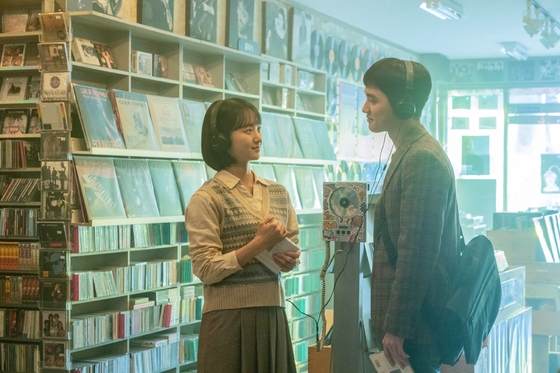
Independent films also gained notable traction through word-of-mouth. For example, the film “The World of Love” attracted over 180,000 moviegoers, making it the most-watched indie Korean film of the year. The horror film “The Substance” also drew 400,000 viewers, despite its niche appeal.
This dynamic reflects a shift in audience behavior and in how theaters are perceived. Viewers have become more open to diverse genres and formats, moving beyond an exclusive focus on mainstream titles. As a result, smaller films have gained increased opportunities for theatrical runs.
“Something like ‘The World of Love’ was never something we expected to take off like that,” critic Jung said. “People watched it, loved it and started spreading the word. The buzz kept growing, and audiences kept asking theaters to screen it, which ended up creating a longer run.”
Experts emphasize that embracing diversity is key to the future survival of theaters, as cinemas increasingly function as spaces where audiences explore and affirm their personal tastes, rather than simply consume content.
“There are actually a lot of really well-made films, even if they’re small- to mid-budget productions,” Jung added. “We need more of those kinds of films to come out, and theaters need to be able to embrace that diversity — that really has to become the main focus.”
BY KIM JI-YE [kim.jiye@joongang.co.kr]